

Gage Whitlock & Editorial Standards
Who writes this content, where technical facts come from, how we handle price figures, and what we refuse to publish.
Byline disclosure
Gage Whitlock is an editorial pen name used by Nashville Foundation Repair. Technical reviewers and project contributors are credited separately by their actual roles and qualifications. We do not attach invented credentials or field experience to this identity.
Why we publish standards at all
Foundation repair is bought by people who cannot see the problem and cannot easily evaluate the proposed solution. That asymmetry is what makes pressure selling effective in this industry, and published standards are one of the few checks available on it.
If we publish a guide stating that a regional karst map cannot diagnose an individual property, we have made it harder for anyone — including our own estimators — to use one as a sales instrument in your living room.
Sourcing
Technical facts come from primary sources.
- Karst and sinkhole mechanisms: USGS guidance on karst terrain and sinkhole formation.
- Contractor licensing: Tennessee's published licensing guidance, including the $25,000 threshold and Home Improvement licensing in adopting counties.
- Permitting: the relevant jurisdiction's requirements, which differ between Metro Nashville and surrounding counties.
- Soil and geology context: published regional data, presented as context rather than as a property diagnosis.
Business claims come from company records. Anything we state about our own work traces to a project record documenting the concern, foundation type, assessment, agreed scope, constraints, work performed, and result.
Price figures
A price figure appears on this site only when it carries a date, a source, the scope it refers to, the unit it is expressed in, and its exclusions. Company averages additionally require a sample size and a timeframe.
Absent figures that meet that standard, we explain cost drivers instead. That is why our cost guides describe variables rather than quoting numbers — a figure without context is not information.
Evidence and project documentation
We do not fabricate projects, customer quotations, prices, or outcomes. Photographs are authentic and used with permission, with captions that describe what is shown.
Before-and-after images use comparable viewpoints with an accurate explanation of what changed. Installation photographs alone do not establish long-term performance, so follow-up dates are recorded where we make performance claims.
Where an illustrative image is used rather than a photograph of our own work, it is identified as such.
What we will not publish
- ZIP-level or address-level sinkhole risk scores.
- Rankings of neighbourhoods as unsafe.
- Estimates of a specific home's likelihood of collapse.
- Permit counts converted into failure probabilities.
- Claims that all Nashville foundation problems come from karst.
- Claims that shrink-swell clay behaviour does not occur locally.
- The words "best", "permanent fix", or "guaranteed to stop movement" as blanket claims.
- Unsupported savings figures or invented urgency.
- Promises to restore every building to its original position.
Language and structure
We write for a homeowner reading on a phone. Plain words, one idea per sentence, and no fixed keyword density, mandatory opening statistics, or repetitive city-name insertion.
Observation guides explain what a reader can see, what details to record, what an evaluation examines, and which uncertainties matter. They offer a next step without prescribing a structural repair from a photograph.
Review before publishing
Before a page goes live: intent, evidence, and next step defined; technical accuracy checked against sources; overlapping intent with existing pages reviewed; and review dates recorded.
Where content describes work requiring technical judgement, it is reviewed by someone qualified in that area, and that person is credited by their actual role.
Corrections
If you find something on this site that does not meet these standards, tell us at quotes@foundationrepairnashville.net. Corrections are made to the page, and substantive ones are noted with the update date.

Gage Whitlock
Foundation Repair Content Editor
Gage Whitlock is an editorial pen name used by Nashville Foundation Repair to steward foundation, basement, and crawl space content for Middle Tennessee homeowners. Technical reviewers and project contributors are credited separately by their actual roles and qualifications.
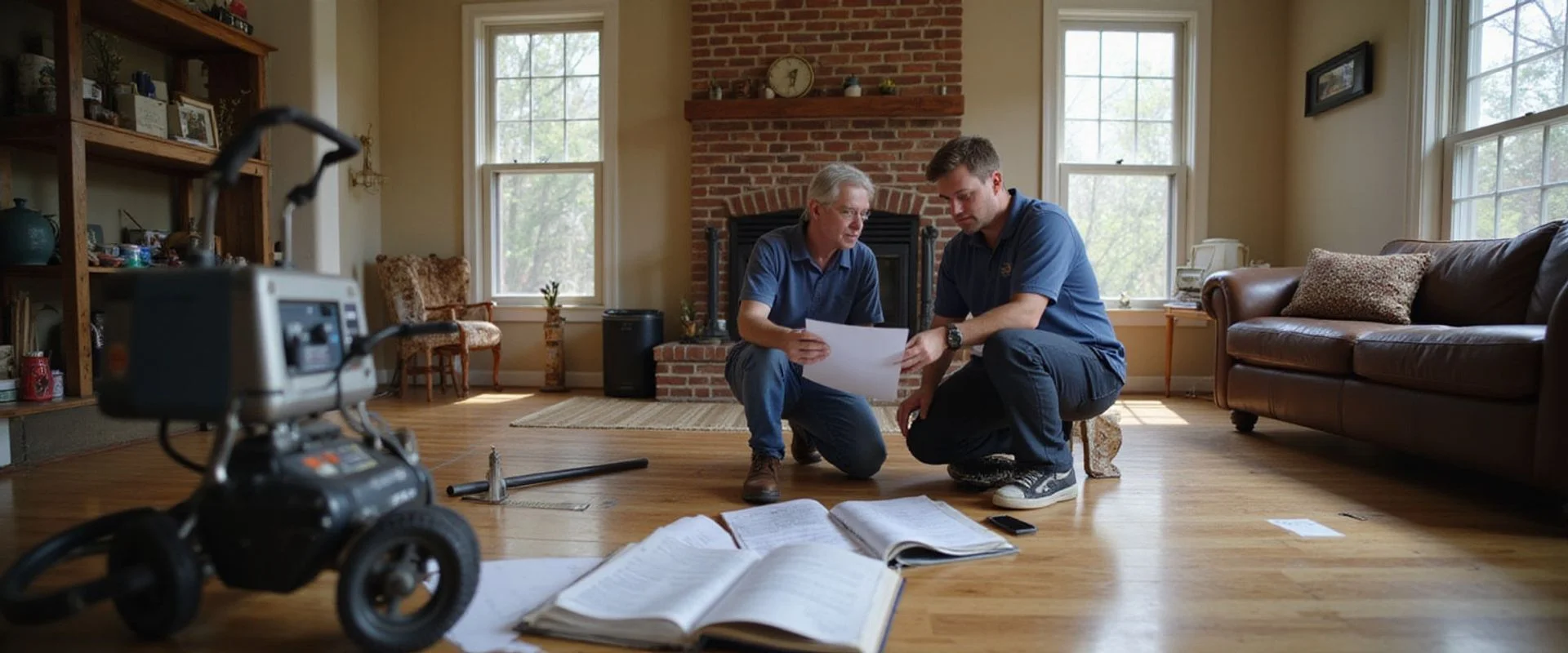
Content is one thing. The evaluation is another.
The same standards apply in the field: measure first, write it down, state the limits.