What basement wall repair addresses
Basement wall repair covers cracking, bowing, and displacement in the walls that retain soil around your basement. The work is stabilization: stopping further movement, and where conditions allow, recovering some position gradually.
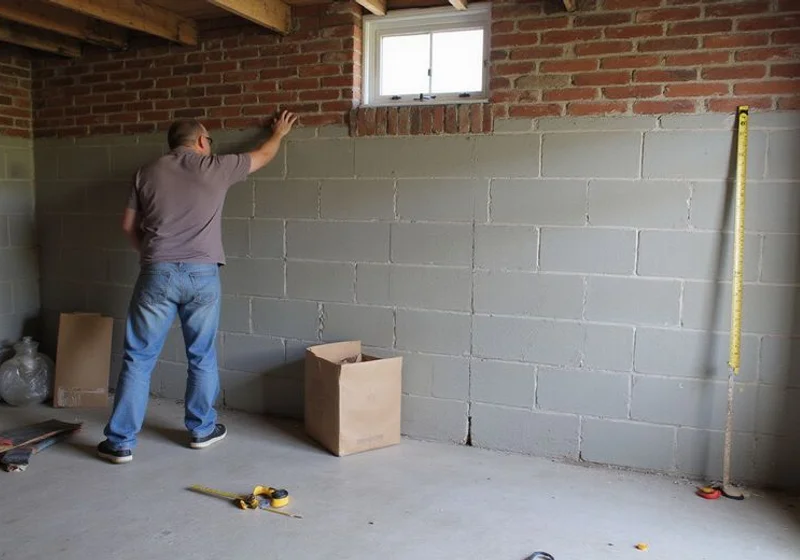
The starting point is always measurement, the same way it is for every other kind of foundation repair in Nashville we take on. How far has the wall moved inward, where, and is it still moving? Those three answers decide both whether work is warranted and which method suits the wall.
Reading the wall
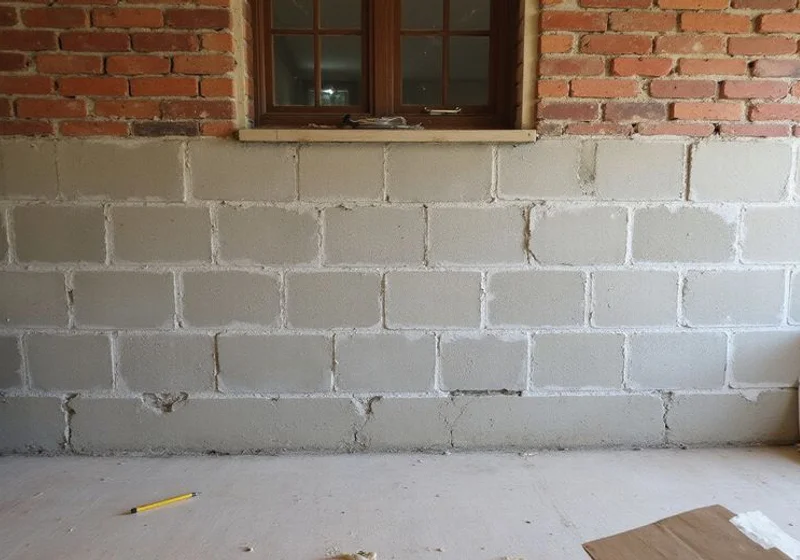
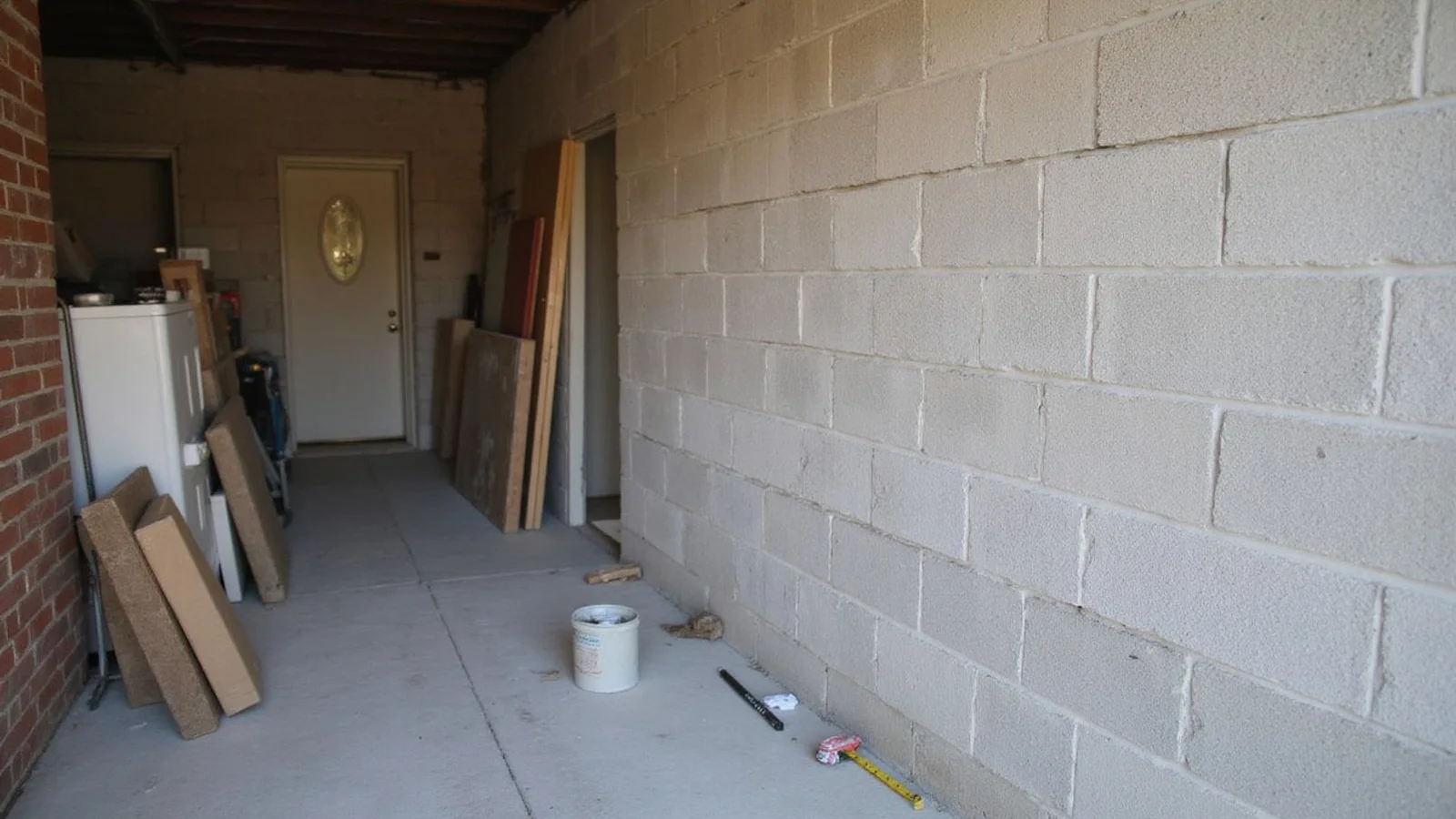
Crack type carries information. Vertical cracks in poured concrete walls are frequently shrinkage-related and may mainly admit water. Horizontal cracking along a mortar bed in a block wall points toward lateral pressure. Stair-step cracking that follows the mortar joints diagonally can indicate differential movement at a corner or a section of footing. Diagonal cracks radiating from window and door corners reflect stress concentration at openings.
Displacement is the more important measurement. A straightedge or plumb line held against the wall shows how far the centre has moved inward relative to the top and bottom. That number, more than crack width, drives method selection.
Whether the movement is active is the third question. A crack monitor fixed across a crack, or dated reference marks at the crack ends, turns a guess into a record. Our guide on when a cracked wall needs repair versus monitoring covers how to do that properly.
Why walls move here
Lateral earth pressure is the mechanism, and two Middle Tennessee conditions intensify it.
Expansive clay backfill is the first. High-plasticity clay takes on water and swells, and swelling soil against a basement wall applies real force. Through a wet spring, that pressure rises; through a dry August, it eases. Walls in clay-backfilled basements often show seasonal behaviour for years before a crack becomes obvious.
Saturated soil is the second. Where drainage delivers water to the backfill zone rather than away from it — a downspout discharging at the wall, a grade that falls toward the house, a failed exterior drain — the soil stays wet and hydrostatic pressure adds to the load.
This is why we look outside before recommending anything inside. Our guide on hydrostatic pressure and basement walls explains the mechanics in plain terms.
Types of stabilization and where each fits
Carbon fiber reinforcement. High-strength straps bonded to a prepared interior wall face resist further inward movement. Suited to limited displacement on sound walls. It is low-profile, needs no exterior excavation, and can be finished over.
Wall anchors and tiebacks. A rod connects an interior wall plate to an anchor plate set in stable soil away from the house. Tensioning can hold the wall and, adjusted over time as soil conditions allow, may recover some position. Requires exterior soil access.
Steel channel bracing. Vertical steel members bear against the wall and connect into the floor system above and the slab below. Useful where displacement exceeds what carbon fiber suits and exterior access is unavailable.
Rebuild. Where a wall has deteriorated past what reinforcement can responsibly hold, the honest answer is reconstruction, which is an engineered scope.
For a side-by-side comparison, see carbon fiber versus wall anchors for bowing walls.
What crack injection does and does not do
Epoxy injection bonds a crack and can restore some continuity across it. Polyurethane injection is flexible and is generally used to stop water entry. Both are useful tools for the right crack.
Neither stabilizes a wall that is moving. Sealing a crack in an actively deflecting wall stops the drip and leaves the cause untouched. We separate those conversations rather than letting a cheaper sealant substitute for a structural answer.
What drives the cost
Length of wall being reinforced and the spacing required. The method dictated by the measured displacement. Wall construction, since block, poured concrete, and stone behave and attach differently. Whether exterior excavation is needed for anchors. Obstructions inside the basement, including finished walls that must come off and go back. Permit and engineering requirements.
Because those vary so widely between two basements on the same street, we quote after measuring, itemized, with exclusions stated.
When to act
Act promptly when deflection is measurable and increasing, when a horizontal crack appears along a mortar bed and widens, when a wall shows displacement at the top course, or when water entry accompanies structural signals. Monitor, with dated records, when cracking is stable and displacement is minimal.
Either way, pair the structural question with a drainage question. A stabilized wall with the same water still arriving at the backfill is a wall carrying the same load it always did. Our basement waterproofing and drainage solutions pages cover that side of the work.