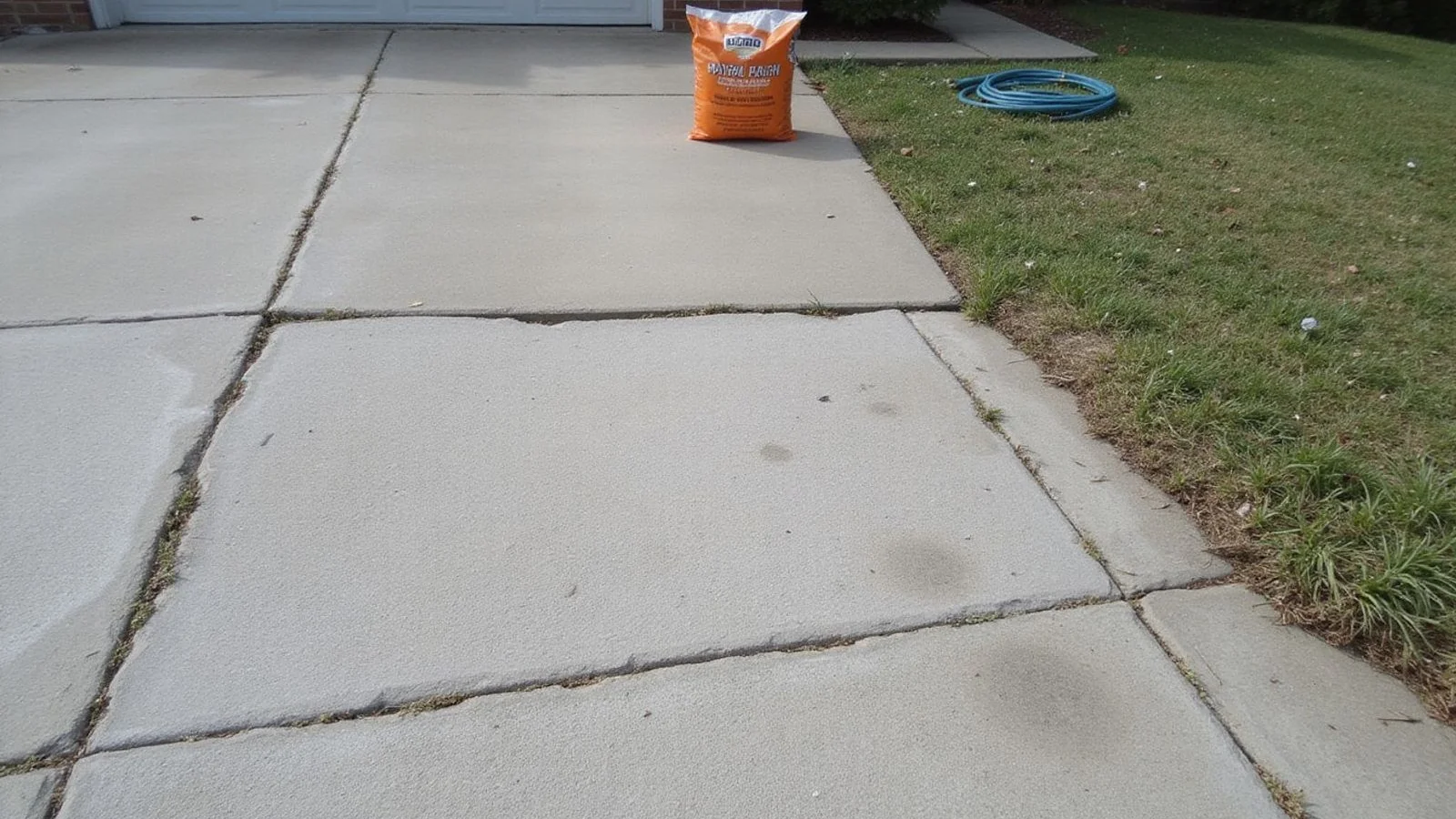
Settled driveway panel showing a height difference at the joint

Concrete Leveling in Nashville, TN

Eligible driveways, walkways, patios, and similar slabs; explains when replacement may be necessary.

Tennessee licensed contractor
Non-commissioned estimators
Itemized written scopes
4.9 (180+ reviews)
Google verified
Estimator calls within 2 business hours
Transferable manufacturer pier warranties
Common Reasons People Call

Sound like what you are seeing?

A trip hazard at the driveway or walkway joint

A settled slab panel that no longer sits flush with its neighbor is both a liability concern and, often, an easy fix compared to full replacement.

Unsure if leveling or replacement is the right call

Leveling works when the slab itself is sound and just needs to be raised. A cracked or crumbling panel is usually a replacement question instead.

Water now pools where the slab dropped

A sunken patio or walkway section can redirect water toward the house instead of away from it, turning a cosmetic issue into a drainage one.

What concrete leveling covers

Concrete leveling lifts settled flatwork: driveways, walkways, sidewalks, patios, steps and landings, garage floors, and pool decks. Expanding polyurethane foam is injected through small ports, fills the void beneath the slab, and raises it in controlled stages.

It is flatwork, not foundation work. The distinction is worth repeating because it drives both scope and price, and because the two get conflated regularly in sales conversations. If the slab in question is carrying your house, that is slab foundation repair, and it is a different job handled by our structural foundation repair team in Nashville.

Why slabs settle around Nashville

Poorly compacted fill. Where a slab was poured over fill that was never properly compacted, consolidation continues afterwards, and it rarely happens evenly.

Soil washout. Water entering through joints and cracks carries fines away over time. This is the most common cause we find, and the one most likely to recur if nothing changes.

Tree roots. Roots displace slabs upward and, when removed or decayed, leave voids behind.

Consolidation over time. Ordinary soil settlement under load, particularly on a driveway that carries vehicles.

Erosion at edges. Concentrated runoff at a downspout or roof valley undermines a slab edge and works inward.
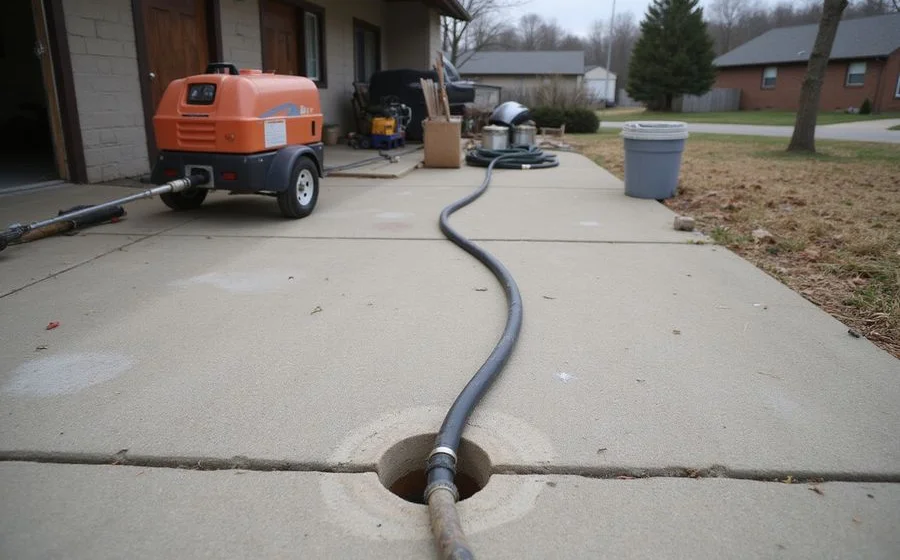
Injection ports drilled in a settled concrete walkway with foam equipment connected

How the lift works

Small ports are drilled through the slab at planned locations. Two-component polyurethane is injected, expands, and first fills the void beneath. Once the void is filled and the foam meets resistance, continued injection generates lift.

That is the reason the process is staged and monitored. Elevation is watched throughout, and injection stops when the target is reached. Over-lifting is not reversible, and a slab pushed too far cracks.

Once the lift is complete, ports are patched. Joints are sealed where useful, which limits the water entry that caused the washout in the first place. Because the foam cures quickly, most residential surfaces return to service the same day.

Foam versus mudjacking

Mudjacking pumps a cementitious slurry through larger holes to raise a slab. It works, and it has been used for decades.

The practical differences: foam is lightweight, so it does not add significant load to soil that already failed to support the slab, and it uses smaller ports, which are less visible afterwards. Mudjacking is heavier and needs more cure time before the surface can be used.

Neither material addresses the reason the void formed. Longevity in both cases depends on whether the water story gets corrected. Our guide on polyurethane foam versus mudjacking goes through the comparison in full.

When we recommend replacement instead

Lifting works on slabs that can move as a unit. When a slab has broken into many small pieces, is crumbling or spalling through its thickness, is too thin to handle the lift, or has deteriorated from years of freeze-thaw and de-icing salts, lifting it produces a raised broken slab rather than a repaired surface.

We say so in those cases. Our guide on concrete leveling versus replacement covers where the line sits.

Address the cause, not just the symptom

A settled slab is evidence that something underneath changed. If washout caused it, the same water will cause it again unless something changes.

That is why joint sealing goes in most of our leveling scopes, and why we look at nearby downspouts, grading, and runoff paths while we are there. Where the water story is significant, drainage correction belongs alongside the lift rather than three years after it.

What drives the cost

Square footage of slab being lifted. Lift height and the volume of void beneath, since foam is consumed by volume. Number of injection ports and access to the work area. Whether joint sealing is included. Whether drainage correction is needed. Slab thickness, reinforcement, and general condition.

For eligible slabs, leveling is typically well below replacement cost and considerably faster, which is the practical reason to have it assessed before assuming a slab has to come out.
Documented Work

Our Concrete Leveling Work

Click any image to enlarge.

Recorded Results

See the difference

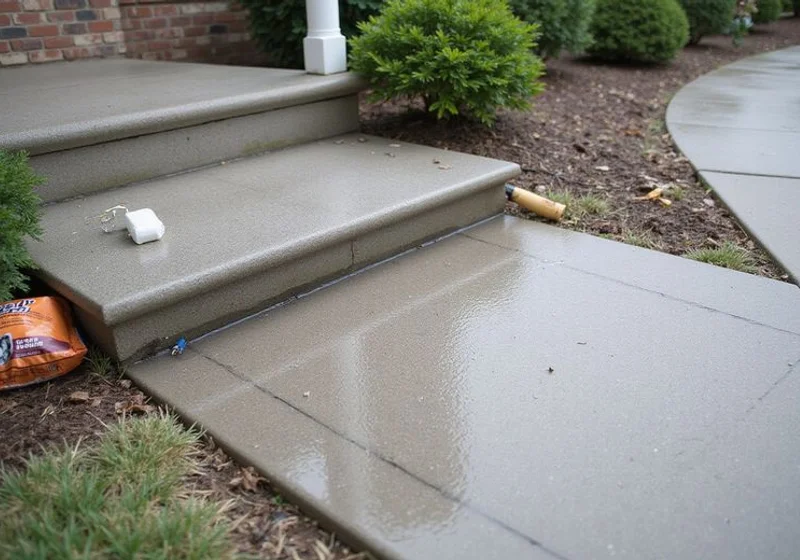
Settled walkway slab sitting below the adjacent section Before
Settled walkway slab sitting below the adjacent section
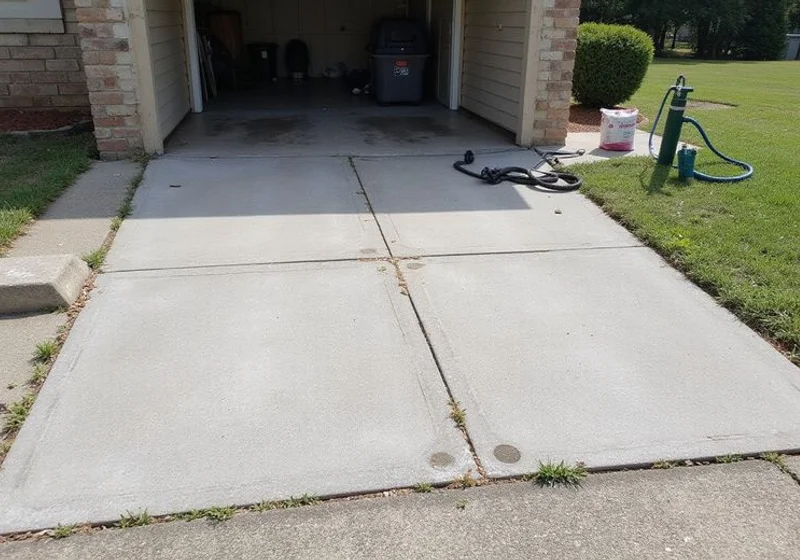
Same walkway lifted flush after foam injection After
Same walkway lifted flush after foam injection

Concrete Leveling — before and after, same viewpoint

Comparison images use matching viewpoints and describe what actually changed. Installation photos alone do not establish long-term performance, so we record follow-up dates on documented projects.

Our Approach

Why Choose Us for Concrete Leveling

We will tell you when to replace

Badly cracked, crumbling, or thin slabs are not lifting candidates. Lifting a slab that is about to fail is money spent twice.

This is not foundation repair

Flatwork leveling and structural slab repair are different scopes. We are clear about which one you are buying.

Causes get addressed

If washout put the void there, the same water will do it again. Joint sealing and drainage correction belong in the conversation.

Controlled, monitored lifting

Foam goes in stages with elevation watched throughout, because over-lifting cracks slabs and is not reversible.

Work Sequence

How Our Concrete Leveling Work Runs

Nothing gets recommended before it gets measured, and nothing gets priced before the scope is written down.

  1. 1

    Assess eligibility

    Slab condition, thickness, crack pattern, and the cause of the settlement decide whether lifting is appropriate or replacement is the honest answer.

  2. 2

    Address the cause

    Slabs settle because something happened underneath. Where water is washing fines out, that gets discussed before the slab goes back up.

  3. 3

    Drill, inject, lift

    Small ports are drilled, expanding polyurethane foam fills voids and lifts the slab in controlled stages while elevation is monitored.

  4. 4

    Patch, seal, return to service

    Ports are patched, joints sealed where useful to limit further washout, and most residential surfaces are usable the same day.

How Nashville Foundation Repair Compares

Feature Typical provider Nashville Foundation Repair
Who inspects your property Commissioned sales representative Non-commissioned estimator
Elevation measurements on site Sometimes, often visual only Recorded where appropriate, with findings in writing
What the quote contains A lump-sum price Itemized scope with quantities and stated exclusions
Permit responsibility Often unstated Named in the scope, jurisdiction by jurisdiction
Karst and sinkhole claims Used as urgency leverage Sourced regional context, never a property diagnosis
Warranty "Lifetime" with unstated conditions Transferable manufacturer pier warranties with terms explained
Homeowner Verification

What Customers Say About Our Concrete Leveling

4.9 out of 5 across 180+ reviews
"Our front walk had dropped almost two inches and collected water. They lifted it in a morning and we walked on it that afternoon."
Doug K.
Nashville, TN
"They told us the back patio was too far gone to lift and recommended replacement instead of taking the easier sale. Appreciated it."
Elena R.
Franklin, TN
"Driveway panel at the garage apron was catching every car. Levelled, sealed the joints, and explained where the water was getting under it."
Trent B.
Smyrna, TN

Reviews shown here are representative of feedback we receive. Verified Google reviews are linked from our reviews page .

Got Questions?

Concrete Leveling FAQs

What is concrete leveling?
Lifting a settled slab back toward its original elevation by injecting expanding polyurethane foam through small ports. The foam fills voids beneath the slab and raises it in controlled stages. It applies to flatwork such as driveways, walkways, patios, steps, and garage floors.
How is it different from foundation repair?
Foundation repair addresses the structural support carrying your house. Concrete leveling addresses flatwork that is not carrying the building. They differ in method, scope, and cost, and confusing them is a common and expensive mistake.
Is foam better than mudjacking?
They are different tools. Polyurethane foam is lightweight, uses small ports, cures quickly, and allows fast return to service. Mudjacking uses a heavier cementitious slurry through larger holes and adds weight to soil that already failed to support the slab. Foam suits most residential work; longevity in either case depends on addressing the cause.
Can any settled slab be lifted?
No. Slabs that are heavily cracked into small pieces, crumbling, spalled through, or too thin to lift as a unit are replacement candidates. We assess condition before quoting, and we will say when lifting is not the right call.
How long does it take?
Most residential flatwork projects are a matter of hours rather than days. The foam cures quickly, ports are patched, and surfaces are typically back in service the same day, which is one of the method's real advantages over replacement.
Will the slab settle again?
It can, if the cause is still active. Foam fills the void that exists now; it does not stop water from washing more fines out next year. That is why joint sealing and drainage correction usually belong in the conversation alongside the lift.
Why did my driveway settle in the first place?
Common causes around Nashville are poorly compacted fill under the slab, water washing fines out through joints and cracks, tree root activity, and soil consolidation over time. The cause matters because it predicts recurrence.
Are the injection holes visible afterwards?
The ports are small and get patched with a cementitious material. They remain visible on close inspection, particularly on a smooth or coloured surface, and that is worth knowing before you start rather than after.
Can you lift a pool deck or steps?
Often yes, where the sections are sound and there is a void to fill. Pool decks have additional considerations around plumbing and the shell, which we discuss during the assessment.
How much does concrete leveling cost?
It varies with square footage, lift height, void volume, port count, access, and whether joint sealing or drainage work is included. It is typically far less than replacement for eligible slabs, which is the practical reason to consider it first.

Still have a question?

Describe what you're noticing and we'll tell you what it usually means and what the next step is.

Request a Foundation Repair Quote
Direct Property Assessment

Request a Concrete Leveling Quote

Tell us about your property and what you're noticing. We'll contact you to discuss the project and the next step toward a quote.

Give us a phone number or an email — at least one so we can reach you.

A form submission is a request to discuss your property. It does not confirm an appointment or establish a price, and any evaluation charge is explained before we schedule. For an active collapse or immediate danger, move away from the area and seek emergency assistance.

An estimator calls within 2 business hours to review symptoms

Ready to have your concrete leveling scoped properly?

An on-site evaluation records the accessible conditions, puts the findings in writing, and tells you what the work would actually involve.

Itemized written scopes with exclusions
Non-commissioned estimators
Transferable manufacturer pier warranties
Call Us Request a Quote