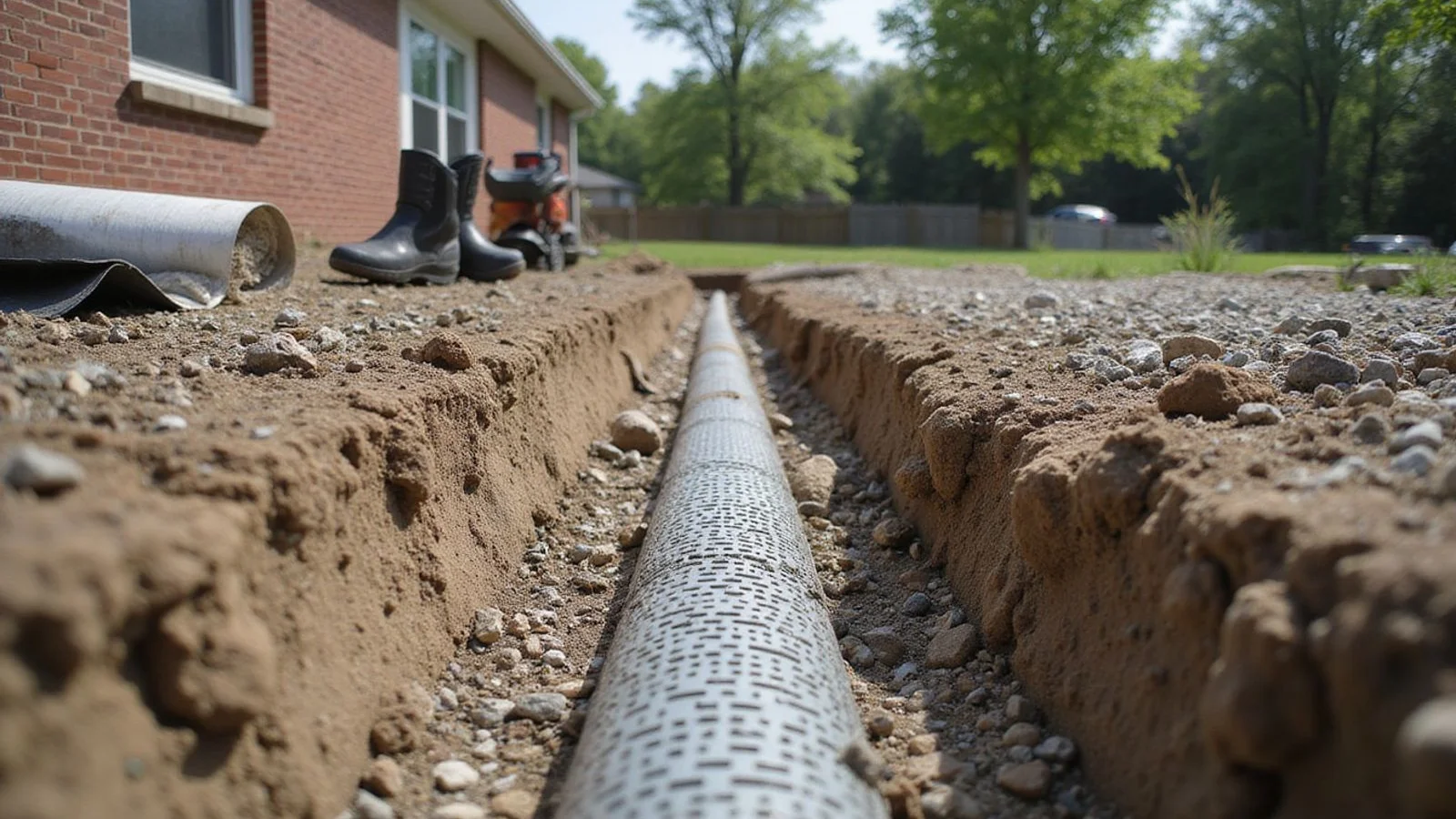
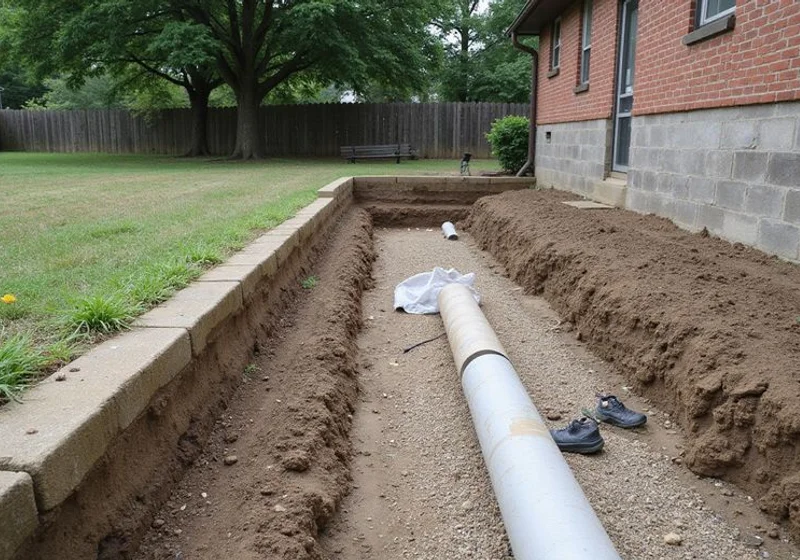
Trench with perforated drain pipe and gravel running across a Middle Tennessee yard

Drainage Solutions in Nashville, TN

Surface-water management, grading, downspout discharge, and appropriate drainage systems.

Tennessee licensed contractor
Non-commissioned estimators
Itemized written scopes
4.9 (180+ reviews)
Google verified
Estimator calls within 2 business hours
Transferable manufacturer pier warranties
Common Reasons People Call

Sound like what you are seeing?

Water pools next to the house after rain

Standing water at the foundation, even for a few hours, adds pressure against footings and basement walls that a dry yard never sees.

The yard slopes the wrong way

A grade that falls toward the house instead of away from it sends every storm's runoff exactly where you do not want it.

A downspout dumps water right at the foundation

Erosion, soil movement, and basement seepage often trace back to something this simple, and it is one of the cheapest problems to fix once identified.

Why drainage is the first conversation, not the last

Most of what damages residential foundations is water, and most of the water is manageable. Roof runoff, surface runoff, and a grade that falls the wrong way deliver enormous volumes into the backfill zone around a house — the most permeable soil on the property, sitting directly against the wall you would rather stay dry.

That is why our Nashville foundation repair evaluations look at where water goes before recommending anything structural. When the story outside is obvious and the measurements inside are unremarkable, drainage correction is the honest scope, and it costs a fraction of underpinning.

What the assessment looks at

Roof discharge points and what happens at each one. Grade direction around the full perimeter, particularly whether ground falls toward or away from the building. Low spots that hold water. Erosion tracks, which show where concentrated flow runs during storms. Saturated ground and areas that stay soft days after rain. Existing buried lines, which frequently turn out to be crushed, disconnected, or full.

Where possible, we look at a property while it is wet. A dry-day walk tells you the topography; a storm tells you the truth.
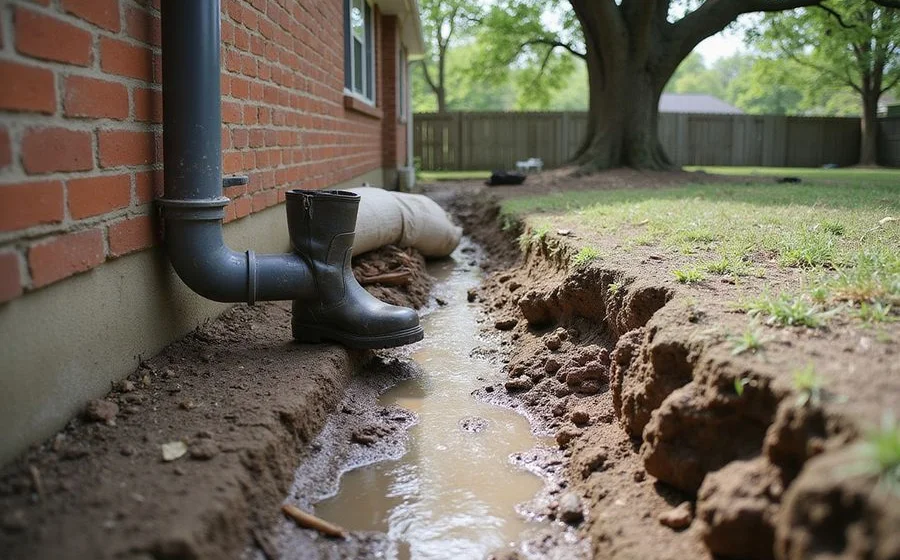
Downspout discharging against a foundation corner with soil eroded and water pooling

The components, and where each one fits

Downspout extensions and buried conductor lines. Roof water is the single largest concentrated volume hitting a residential foundation. Moving it well away from the house is usually the highest-value, lowest-cost correction available. Buried lines to a distant outlet solve the practical problem with surface extensions, which is that they get moved.

Pop-up emitters. A buried outlet that opens under flow and sits flush the rest of the time, releasing water at a point well away from the building without a permanently open pipe end.

Catch basins. Grated collection points at low spots, feeding into a piped run. Useful where an area cannot be graded away and needs to be collected instead.

Grading and swales. Re-establishing a fall away from the foundation, and shaping shallow channels that carry sheet flow around rather than through the area you want dry.

French drains. Perforated pipe in washed stone, wrapped in geotextile, sloped to a discharge point. Exterior versions intercept yard and soil water. Interior versions handle water reaching a basement footing and usually pair with a sump. Our guide on interior versus exterior French drains covers the choice.

The part that gets skipped: where the water ends up

Every drainage component in the list above collects water. None of them dispose of it. The termination point is what determines whether a system actually works, and it is the element most often improvised at the end of an installation.

A line that discharges twelve feet from the wall onto ground that slopes back toward the house has accomplished nothing. A pop-up emitter set in the lowest part of the yard will surcharge and back up. A discharge that crosses onto a neighbour’s property creates a different problem entirely.

We plan the route and the outlet as part of the design, including what happens during the heaviest events rather than typical ones.

What drives the cost

Linear feet of trenching and pipe. Depth required, and whether rock is encountered — which in Middle Tennessee is a genuine possibility, not a theoretical one. Number of collection points, basins, and emitters. Distance to a viable discharge point. Obstacles: driveways, patios, retaining walls, mature tree roots, buried utilities, and irrigation lines. Surface restoration, whether that is seed, sod, gravel, or replacing hardscape that had to come up.

Maintenance

Drainage systems are not fit-and-forget. Gutters need clearing, or the buried line they feed does nothing. Catch basin grates collect leaves. Pop-up emitters can be obstructed by grass growth or mulch. Outlets get buried by landscaping over a few seasons.

Our guide on foundation and water-system maintenance sets out a seasonal routine that takes very little time and prevents most of the failures we get called back to look at, and our wet-season checklist for Middle Tennessee homeowners covers what to walk before the rain sets in.

Where drainage stops being the answer

Drainage prevents and it reduces. It does not restore support that has already been lost, stabilize a wall that has already moved, or repair framing that has already decayed. Where measurements show real structural movement, drainage belongs alongside the structural scope rather than instead of it — because stabilizing a wall while leaving the water that loaded it is only half a project.
Documented Work

Our Drainage Work

Click any image to enlarge.

Recorded Results

See the difference

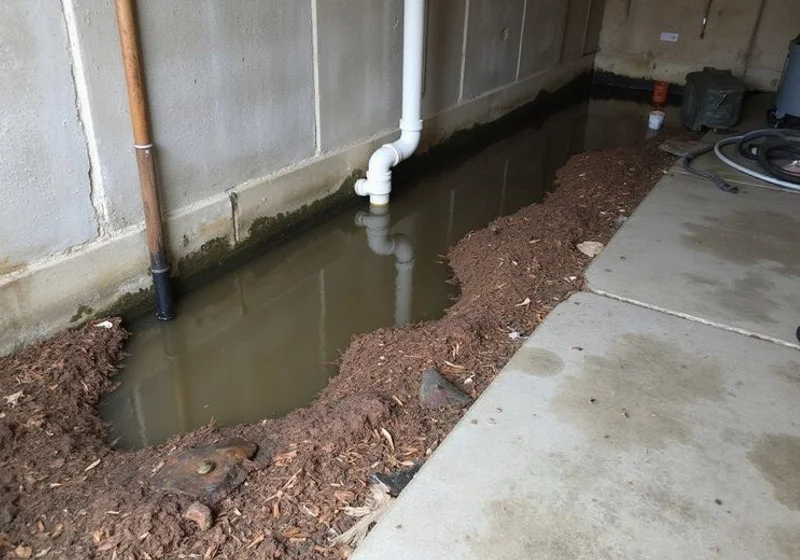
Standing water pooled against a foundation wall after a storm Before
Standing water pooled against a foundation wall after a storm
Same area regraded and drained, dry after rain After
Same area regraded and drained, dry after rain

Drainage — before and after, same viewpoint

Comparison images use matching viewpoints and describe what actually changed. Installation photos alone do not establish long-term performance, so we record follow-up dates on documented projects.

Our Approach

Why Choose Us for Drainage

Often the cheapest real fix

Where drainage is the cause, correcting it costs a fraction of structural work. We recommend it when the evidence points there, even though it is the smaller job.

We plan the termination point

A drain that discharges into the same saturated zone has moved water sideways. Where the water ends up is designed, not improvised.

Roof water gets addressed first

Gutters and downspouts concentrate an enormous volume in a few places. Fixing that is step one on most wet-foundation properties.

No over-engineering

Not every yard needs a French drain. Sometimes the honest scope is three downspout extensions and a regrade.

Work Sequence

How Our Drainage Work Runs

Nothing gets recommended before it gets measured, and nothing gets priced before the scope is written down.

  1. 1

    Watch where the water goes

    Roof discharge points, grade direction, low spots, erosion tracks, and saturated areas are recorded. Storm behaviour tells more than a dry-day look.

  2. 2

    Prioritise the roof first

    Roof runoff is the largest concentrated volume hitting most residential foundations, and redirecting it is usually the cheapest meaningful improvement.

  3. 3

    Design the route

    Collection points, pipe sizing, slope, and a termination point that works with your site — not a line that stops ten feet from where it started.

  4. 4

    Install and restore

    Trenching, pipe and stone placement, backfill, and the surface restoration stated in the scope.

How Nashville Foundation Repair Compares

Feature Typical provider Nashville Foundation Repair
Who inspects your property Commissioned sales representative Non-commissioned estimator
Elevation measurements on site Sometimes, often visual only Recorded where appropriate, with findings in writing
What the quote contains A lump-sum price Itemized scope with quantities and stated exclusions
Permit responsibility Often unstated Named in the scope, jurisdiction by jurisdiction
Karst and sinkhole claims Used as urgency leverage Sourced regional context, never a property diagnosis
Warranty "Lifetime" with unstated conditions Transferable manufacturer pier warranties with terms explained
Homeowner Verification

What Customers Say About Our Drainage

4.9 out of 5 across 180+ reviews
"They found that our water was coming from a buried downspout line that had collapsed. The fix was a fraction of the interior system another company quoted."
Nicole B.
Nashville, TN
"Regrading and two buried downspout lines. The corner of the yard that never dried out is finally usable."
Frank and Deb S.
Brentwood, TN
"They told us we didn't need the full French drain we asked for. Sorted the roof water instead, and that was that."
Yolanda P.
Murfreesboro, TN

Reviews shown here are representative of feedback we receive. Verified Google reviews are linked from our reviews page .

Got Questions?

Drainage FAQs

How far should downspouts discharge from the house?
Far enough that runoff does not soak into the backfill zone around the foundation, and onto ground that carries it away rather than holding it. A buried conductor line to a pop-up emitter well out in the yard achieves that far more reliably than a short splash block.
What is a French drain?
A trench containing perforated pipe surrounded by washed stone and wrapped in geotextile fabric, sloped to a discharge point. It collects water from the surrounding soil and carries it away. Exterior versions handle yard and soil water; interior versions handle water reaching a basement footing.
Do French drains clog?
They can silt up over time, particularly where fabric was omitted, the wrong stone was used, or fines migrate from surrounding soil. Design matters, and so does keeping collection points and outlets clear.
Will drainage work fix my foundation problem?
It depends on the cause. Where movement or water entry traces to concentrated runoff or poor grading, correcting the drainage removes the driver, and in a real share of cases that is most of the answer. Where settlement has already occurred, drainage prevents recurrence but does not restore support.
Is grading really that important?
Yes. Ground that falls toward a house delivers surface water directly to the backfill zone, which is the most permeable soil around the building. Establishing a fall away from the foundation is one of the highest-value corrections on most properties.
What is a catch basin for?
It collects surface water at a low point through a grate and routes it into a pipe. Useful where an area of yard collects water that cannot be graded away. Grates need occasional clearing of leaves and debris.
Can I just extend the downspouts myself?
Often yes, and it is a sensible first move. Surface extensions are cheap and reversible. The limitations are that they get moved by mowing, they look untidy, and on a tight lot there may be nowhere for the water to go without a buried line.
Do you handle drainage on sloped lots?
Yes, and sloped lots need it most. Water arriving from uphill can load a foundation wall in ways a flat-lot assessment would miss. Swales, interception drains, and careful routing are the usual tools.
Will you dig up my whole yard?
Only where the scope requires it. Trenching is linear and targeted, and the scope states the run length, the depth, the obstacles anticipated, and what restoration is included. Hardscape and mature tree roots are flagged upfront because they change the approach.
How does drainage relate to waterproofing?
Drainage keeps water away from the foundation; waterproofing manages water that has already arrived. Where the water source is clearly exterior, drainage is the more direct answer and often the cheaper one.

Still have a question?

Describe what you're noticing and we'll tell you what it usually means and what the next step is.

Request a Foundation Repair Quote
Direct Property Assessment

Request a Drainage Quote

Tell us about your property and what you're noticing. We'll contact you to discuss the project and the next step toward a quote.

Give us a phone number or an email — at least one so we can reach you.

A form submission is a request to discuss your property. It does not confirm an appointment or establish a price, and any evaluation charge is explained before we schedule. For an active collapse or immediate danger, move away from the area and seek emergency assistance.

An estimator calls within 2 business hours to review symptoms

Ready to have your drainage scoped properly?

An on-site evaluation records the accessible conditions, puts the findings in writing, and tells you what the work would actually involve.

Itemized written scopes with exclusions
Non-commissioned estimators
Transferable manufacturer pier warranties
Call Us Request a Quote