What slab foundation repair covers
Slab foundation repair addresses the structural support of a slab-on-grade home: the footings and bearing conditions that carry the load, and the movement that happens when those conditions change. It is not cosmetic flatwork, and it is not a surface treatment for cracks.
The distinction matters because the two are frequently blurred in sales conversations. A settled patio slab and a settled load-bearing footing look similar in a photograph and cost dramatically different amounts to address. Before our Nashville foundation repair team proposes anything, we establish which one you have.
The observations that prompt an evaluation
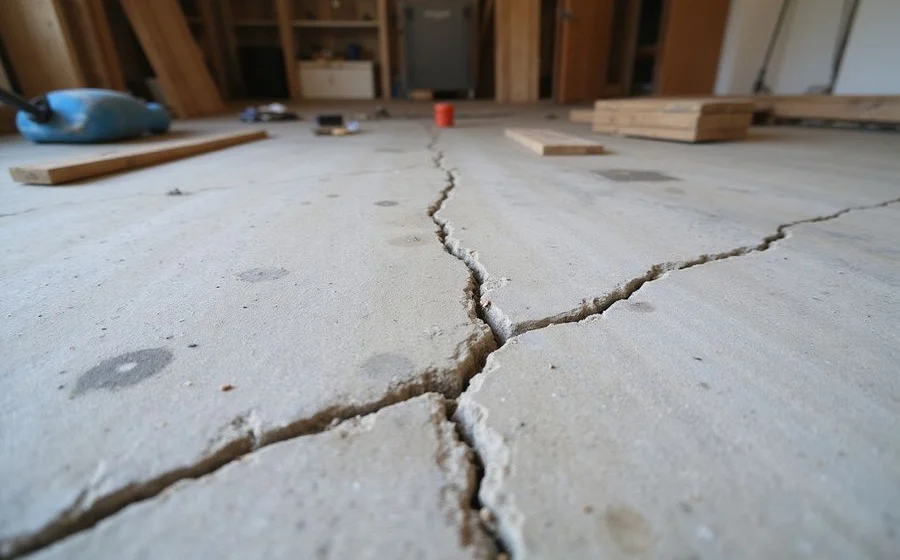
Homeowners usually call after noticing a combination rather than a single symptom. Doors and windows binding on one side of the house. Separations opening between trim and floor. Diagonal drywall cracks running from door and window corners. Stair-step cracking in brick veneer, particularly near a garage opening or an outside corner. A floor that has developed a noticeable slope in one area.
Individually, each of those has innocent explanations. Together, in one part of the house, with a matching elevation pattern underneath them, they describe differential settlement.
Why slabs move in Middle Tennessee
Around Nashville, several mechanisms act on slab-on-grade construction, sometimes at the same time.
Poorly compacted fill is the most common finding on newer lots. Where a site was cut and filled to create a building pad, consolidation continues after construction, and it rarely happens evenly.
Expansive clay adds a seasonal component. High-plasticity clay swells through a wet spring and shrinks through a dry August, and shallow footings on that clay ride the cycle. The resulting movement often appears and partly recedes with the seasons, which is one reason recording the date a crack first appeared is so useful.
Soil washout is the quiet one. Concentrated water from a downspout, a broken conductor line, or a badly graded surface can carry fines away from under a slab edge over years, leaving voids that the slab eventually bridges or drops into.
Then there is the soil-to-rock transition. Middle Tennessee’s limestone means depth to competent bearing material can change substantially across a single lot, so one part of a house can sit on rock and another on several feet of soil.
Under-slab plumbing leaks belong on the list too. A sustained leak moves fines and saturates bearing soils, and an underpinning scope installed over an unresolved leak is money spent on the wrong problem.
Repair options and their limits
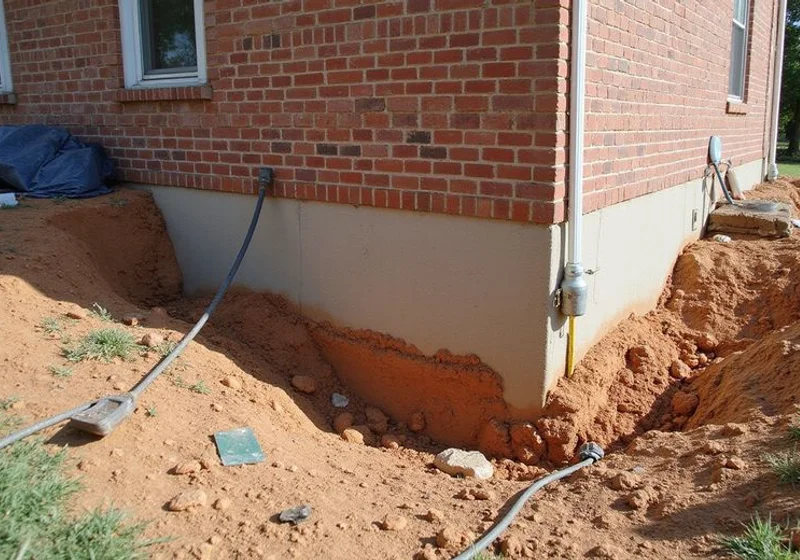
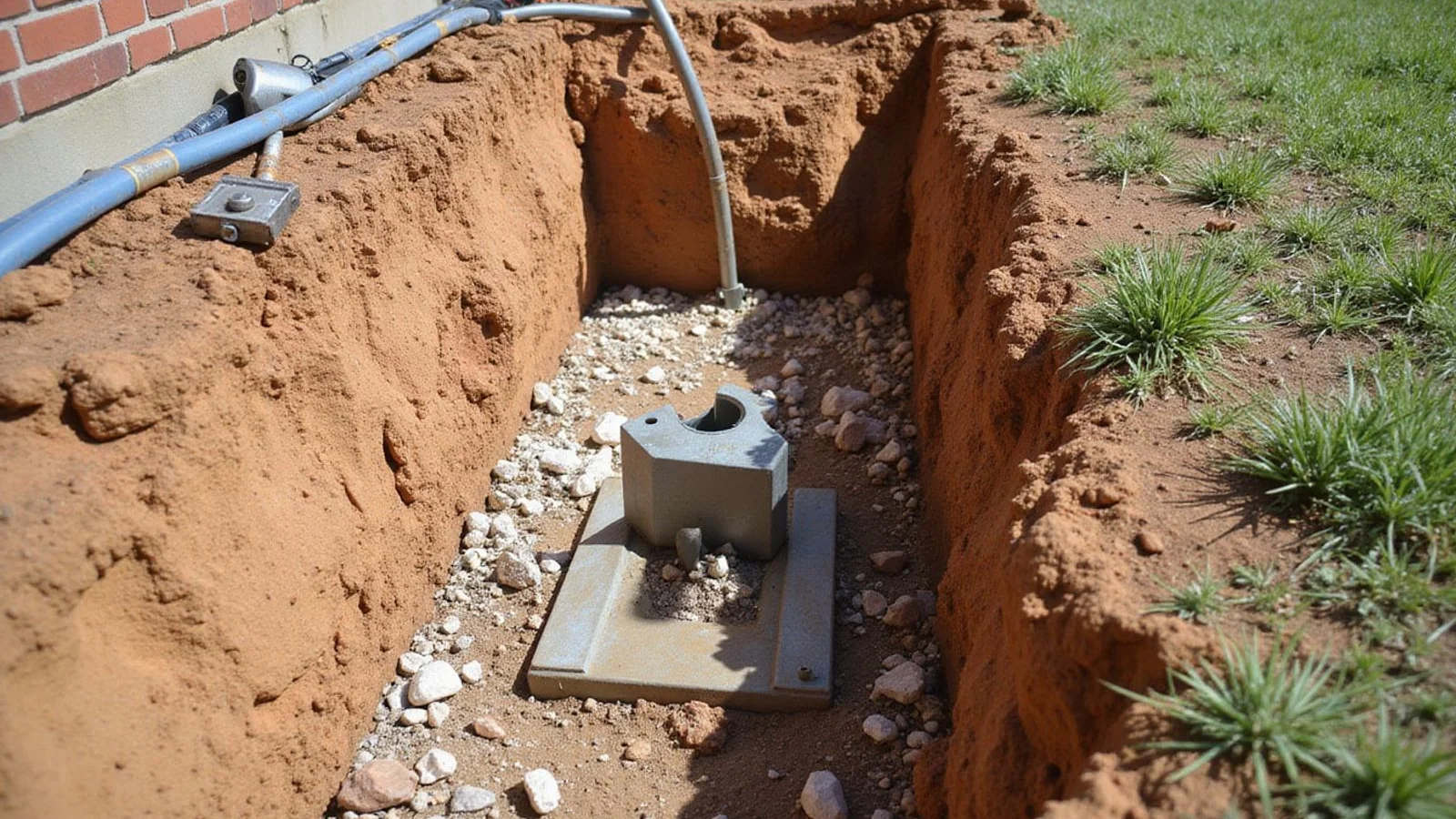
Push pier underpinning. Steel sections are driven hydraulically, using the structure’s own weight as reaction, until they reach refusal on load-bearing strata. Suited to conditions where competent bearing material exists at a reachable depth and the structure can provide adequate reaction.
Helical pier underpinning. Helical shafts are screwed into the soil, developing capacity through their helices and verified installation torque. Useful where end-bearing depth is impractical or where lighter reaction is available.
Void filling and support beneath a structural slab. Where the slab itself is sound but bearing has been lost underneath, filling the void can be appropriate — but only when the cause of the loss has been resolved.
Monitoring. Sometimes the right scope is no scope. Stable, long-settled movement in an older home is monitored with dated measurements rather than underpinned, and we will say so when the readings support it.
None of these methods “fixes the soil”. They transfer or restore support. Drainage correction frequently belongs alongside them, because water is what moved the soil in the first place.
Structural repair versus concrete leveling
If the slab in question is a driveway, walkway, patio, garage floor, or pool deck, the scope is concrete leveling: lifting eligible slabs with polyurethane foam and sealing joints to limit further washout. It is faster, considerably cheaper, and appropriate for cosmetic and trip-hazard problems.
If the slab in question is carrying the house, that is structural, and leveling is not the answer. Our structural slab repair versus concrete leveling guide walks through the distinction with examples, and the concrete leveling service page covers the flatwork side.
What drives the cost
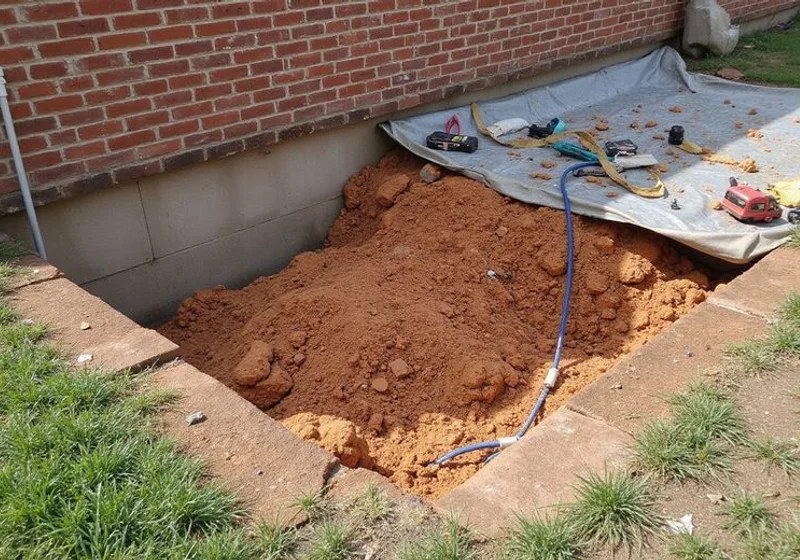
Support count and depth to competent bearing material do most of the work in a slab repair number. After that: access for equipment, excavation volume and spoil disposal, whether any work has to go through the interior slab, utility conflicts, permit and engineering requirements, and the restoration you want included.
We do not publish a flat per-pier figure, because a figure without a date, source, scope, unit, and exclusions is not information. What you get instead is an itemized scope after measurement, with every one of those variables written down.
When to act and when to watch
Act when the pattern is progressive: cracks that widened over a season, a door that went from sticky in August to sticky year-round, a floor slope that neighbours on the same street do not have. Watch when the evidence points to long-settled movement — and watch properly, with dated photographs and marked crack ends, so that next year’s comparison means something.
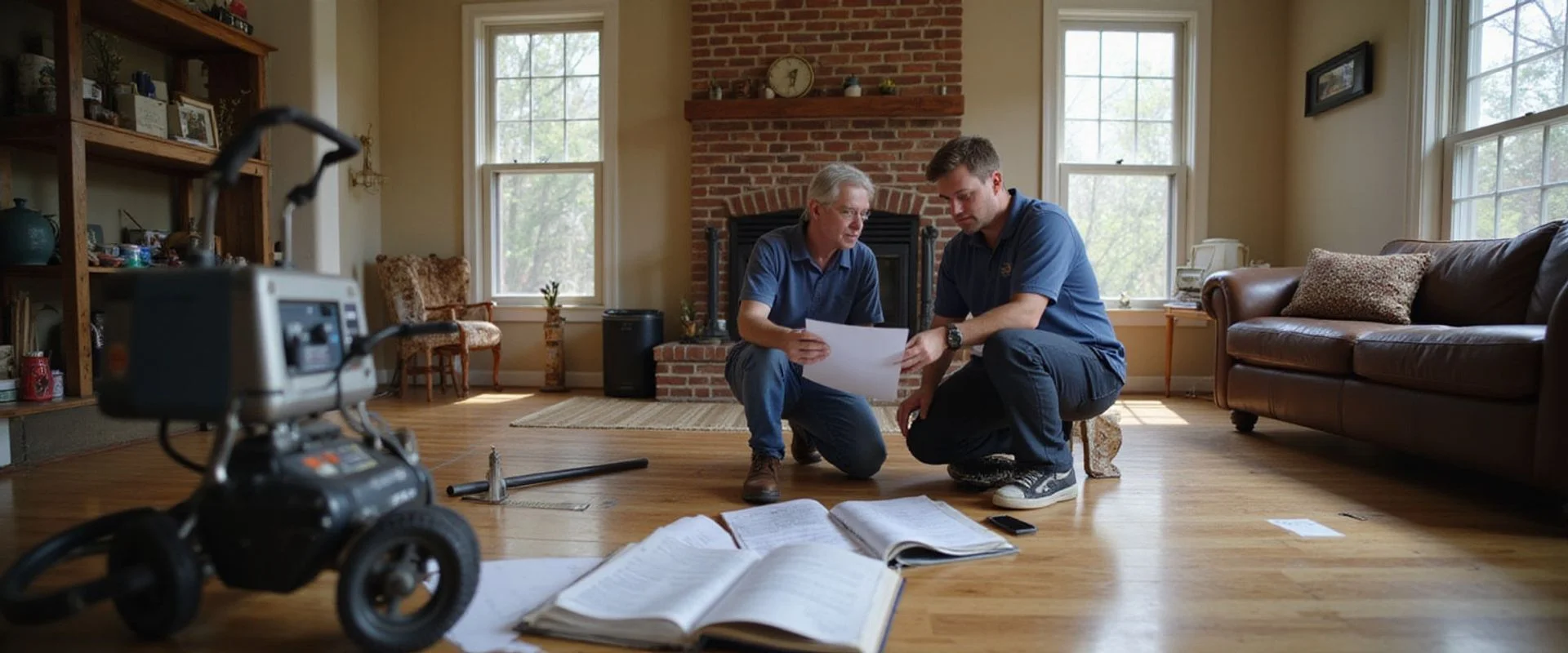
Either way, an on-site evaluation is what produces the measurements the decision rests on.