
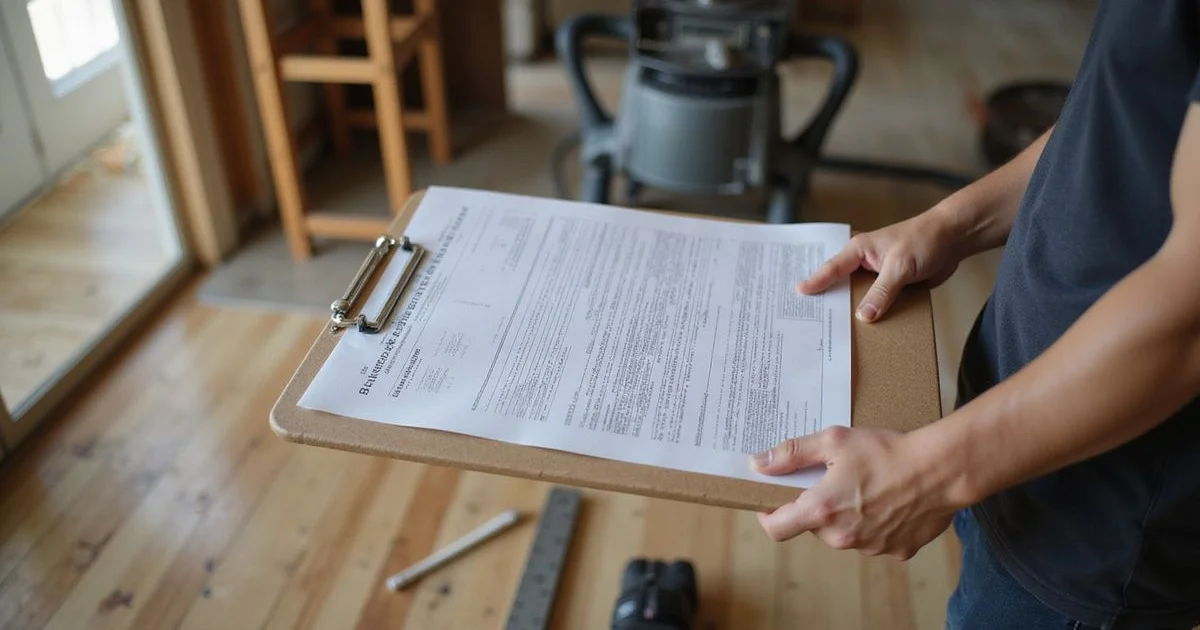
Why we will not give you a universal answer
Search this topic and you will find confident blanket statements in both directions: foundation repair always needs a permit, or never does. Neither is true, and both cause problems.
Permitting depends on two things: the jurisdiction your property sits in, and the specific scope of work proposed. Change either and the answer can change.

Metro Nashville is its own system
Metro Nashville and Davidson County have a consolidated government, and the Metro Nashville Department of Codes and Building Safety administers building permits and inspections for the area.
Surrounding jurisdictions — Williamson, Rutherford, Sumner, Wilson, Robertson, Cheatham, and Maury counties, plus municipalities within them — administer their own. Requirements, fee structures, submission processes, and inspection practices vary.
So for a Brentwood address, Williamson County’s requirements apply rather than Metro’s. For Mount Juliet, Wilson County. And within counties, incorporated cities may have their own additional processes.
Scope drives the answer
Broadly, scopes fall into categories that tend to be treated differently.
Structural work — underpinning, pier installation, basement wall stabilization, structural framing repair, and anything altering how the building carries load — is the category most likely to require a permit and inspection.
Water management work — interior perimeter drainage, sump installation, exterior drainage, grading — is treated variably, and can involve other considerations such as stormwater rules or discharge restrictions.
Cosmetic and maintenance work — crack sealing, joint sealing, concrete leveling of flatwork — is less commonly permitted, though this is not a guarantee.
The right question is not “does foundation repair need a permit” but “does this proposed scope, at this address, require a permit”.
When further review applies
Some situations trigger review beyond a standard permit application.
Where the work requires an engineered design, a licensed professional engineer’s stamped drawings may be required for submission. Where the property sits in a floodplain or a special overlay, additional review may apply. Historic districts frequently have their own review process for work affecting exterior appearance. And unusual structural conditions may prompt a jurisdiction to require additional documentation.
Who handles it
Typically the contractor coordinates the permit where one is required, since they hold the licence and are performing the work. The written scope should state this plainly: who applies, who pays the fee, and whether inspection coordination is included.
This matters when comparing proposals. A quote that includes permit fees and coordination against one that excludes them is not directly comparable on price, and the exclusion is easy to miss.
Why it matters that it is done properly
Permitted work is inspected, which is an independent check on the installation.
It also creates a record. When you sell, documented and permitted repair work is a substantially better story than undocumented work, and buyers’ inspectors ask. Our guide on buying or selling after foundation repair covers what those records are worth.
Unpermitted structural work can complicate a sale, an insurance claim, or a future permit application on the same property.
What to ask before you sign
Does this scope require a permit at my address? Who applies for it? Is the fee included in the price? Will an engineer’s stamped design be required? Who coordinates inspections? Will I receive copies of the permit and the final inspection record?
A company that answers those readily is a company that pulls permits regularly. Vagueness here is worth noticing.
How we handle it
We identify the applicable jurisdiction and state, in the written scope, whether a permit is required for the proposed work and who handles it. Where a stamped engineered design is required, we say so rather than discovering it mid-project.
If you want to understand the licensing side as well, our guide on Tennessee contractor license checks explains the thresholds. And the basement wall repair service page is a useful example of the kind of structural scope where permitting most often applies.