
Slab homes show movement differently
A house on a slab-on-grade foundation does not have a crawl space or basement where you can look at the structure directly. Everything you observe is indirect, which makes reading the pattern more important than reading any single symptom.
Here is what to look for, and what each one typically means.
Cracking in the slab itself
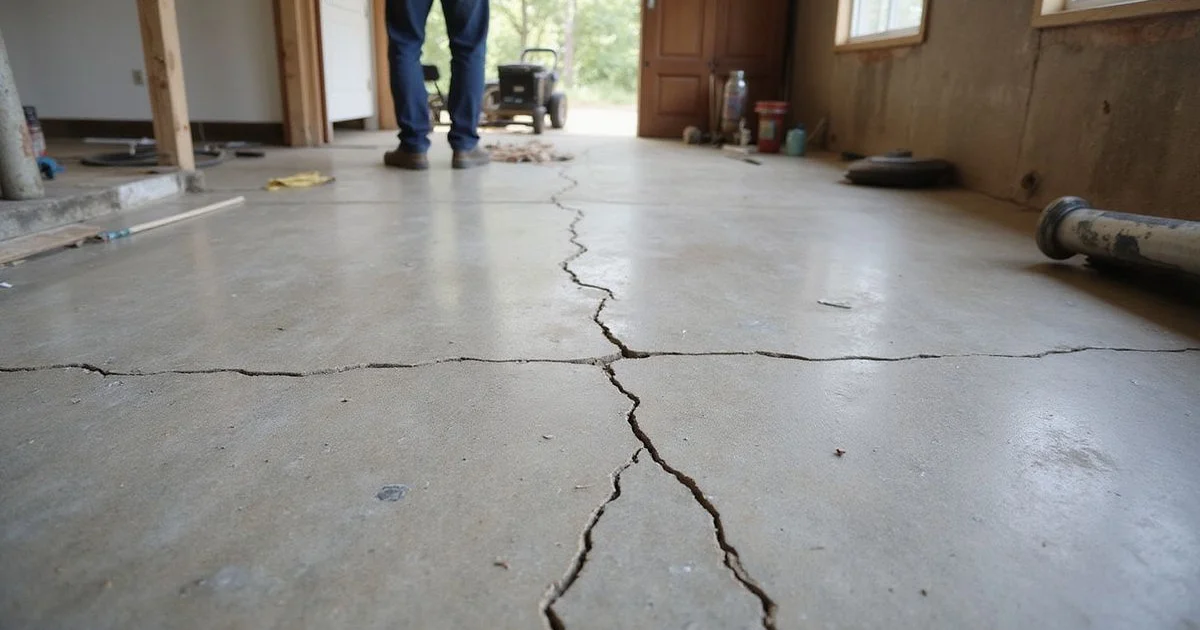
Cracks in a concrete slab are common and mostly ordinary. Concrete shrinks as it cures, and shrinkage cracking is the result. They are typically narrow, wandering, and flat — meaning both sides of the crack sit at the same height.
The ones worth attention share different characteristics: appreciable width, a height difference across the crack so you can feel a lip underfoot, a pattern that runs in a consistent direction, or a crack that has visibly widened.
Where a slab is covered with tile or wood, cracking may show up in the covering instead: tile cracking in a line, or grout failing along a consistent path.
Uneven or sloping floors
Take a marble or a ball and set it on the floor in several rooms. Consistent movement in one direction is a useful, rough indicator.
Note where it is worst, and whether furniture has developed a visible tilt. A slope concentrated at one corner suggests localised settlement; a general slope across a large area can be original construction.
Separations at walls and trim
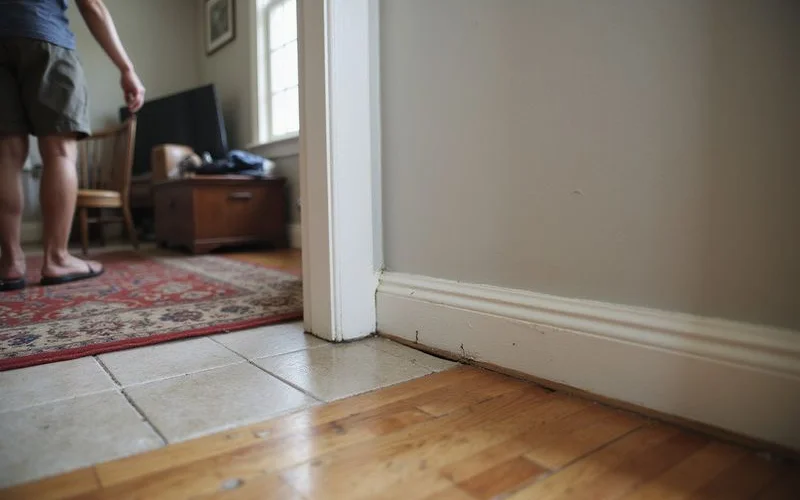
Gaps opening between baseboards and the floor, or between trim and walls, are among the clearer indicators on a slab home. Where a slab has dropped relative to a framed wall, the gap appears at the bottom.
Look also at door frames, kitchen cabinets that have pulled away from a wall, and countertops that have separated from backsplashes.
Doors, windows, and drywall
Doors binding, particularly with an uneven reveal around the frame. Diagonal drywall cracks radiating from door and window corners. Cracks at ceiling-wall junctions. Windows that have become hard to operate.
Seasonal binding that resolves in drier months usually points to humidity rather than movement.
Exterior signs
Stair-step cracking in brick veneer, particularly at corners and near garage openings. Separation under a lintel. Gaps opening between a porch, patio, or garage apron and the house. Cracking at the point where a one-storey section meets a two-storey section.
What to record
Photograph each finding with a scale reference and a date. Mark crack ends with a pencil and date the marks. Note which season, since some movement in Middle Tennessee is seasonal clay behaviour rather than progressive settlement.
Note anything that changed around the property recently: a tree removed, landscaping altered, drainage changed, plumbing work, a new patio or driveway.
Do the marble test in several rooms and note where it rolls.
Ruling out the alternatives
Before concluding settlement, three other explanations deserve attention.
Shrinkage cracking, which is a curing artefact rather than a movement signal.
Flatwork settlement, where the affected slab is a patio, walkway, or garage apron rather than the structural slab under the house. That is a leveling question, and our guide on structural slab repair versus concrete leveling covers the distinction.
Under-slab plumbing leaks, which can produce genuine movement and need a plumber’s investigation rather than an underpinning quote.
Getting it measured
Relative floor elevation readings across the accessible area are what turn a set of impressions into a pattern. The slab foundation repair service page explains how we assess slab homes, and what distinguishes a structural scope from a cosmetic one.