
The distinction that decides the price
These two services get conflated constantly, and the confusion is expensive in both directions. Homeowners pay for structural work on a settled patio, or accept a leveling quote for a house that needed underpinning.
The difference is simple to state: is the slab in question carrying the building?
What concrete leveling is
Concrete leveling lifts settled flatwork back toward its original elevation, typically by injecting expanding polyurethane foam through small ports. The foam fills the void underneath and raises the slab in controlled stages.
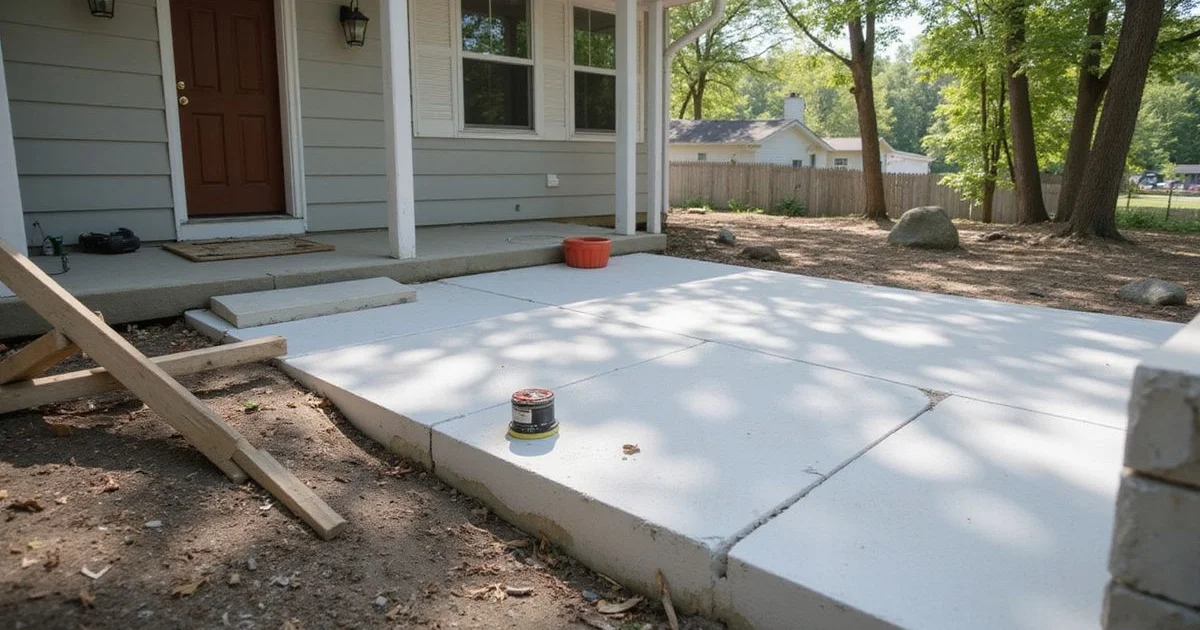
It applies to: driveways, walkways, sidewalks, patios, pool decks, steps and landings, garage aprons, and in some cases garage floors.
It fixes: trip hazards, water ponding on a slab that now falls the wrong way, an unsightly step between sections, and the appearance of a settled surface.
It is: relatively quick, considerably less expensive, and usually back in service the same day.
What structural slab repair is
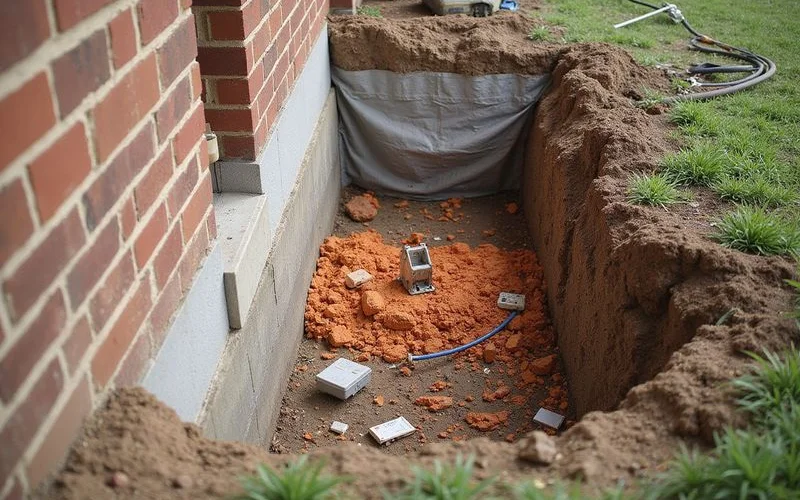
Structural slab repair addresses the support conditions carrying the house — the footings and bearing material beneath the structural slab and the loads it supports.
It applies to: the foundation itself, where measurement shows differential settlement of the structure.
It fixes: the support deficiency, usually by underpinning with steel piers to competent bearing material, sometimes with void filling where bearing was lost under a sound slab.
It is: engineered, excavation-intensive, permitted in many cases, and priced accordingly.
How to tell which you have
Ask what has actually moved.
If the answer is “the driveway has dropped at the garage” or “the patio slopes back toward the house”, that is flatwork. The house structure is not involved, and the scope is leveling.
If the answer is “a corner of the house has dropped, doors bind in that area, brick is cracking on that elevation, and elevation readings show a consistent fall”, that is structural.
Where both are true — and they sometimes are, because the same washout can affect both — they are two scopes on one property, priced separately.
What measurement establishes
Relative floor elevation readings inside the house are what settle the question. A consistent fall toward a corner, corresponding with exterior cracking and interior symptoms, describes structural movement. Flat readings inside with a dropped driveway outside describe flatwork settlement.
This is why we take readings before quoting. Diagnosing from the driveway is guessing.
Why leveling cannot substitute for structural work
Foam lifting raises a slab by filling voids and applying pressure beneath it. It is an effective way to move a slab that is not carrying a building.
It does not transfer structural load to deeper competent material, which is what underpinning does. Applied to a settled load-bearing footing, it is not the engineering solution the condition calls for.
Conversely, underpinning a driveway panel would be a remarkable waste of money.
The cause matters in both cases
Whichever scope applies, the underlying reason the void or settlement occurred usually involves water: concentrated runoff washing fines out, poor grading, or a failed drainage line.
For flatwork, that means joint sealing and drainage correction alongside the lift, or you will be lifting it again — our guide on signs of slab foundation problems covers what distinguishes the two patterns. For structural work, it means the drainage picture belongs in the scope rather than being left for later.
Which page you want next
If the slab in question is flatwork, our concrete leveling page covers method, eligibility, and when replacement is the better answer.
If the house itself is showing movement, the slab foundation repair page explains how we assess and scope structural work — and how we tell the two apart before anything is proposed.