Middle Tennessee’s wetter months are the period when foundation problems announce themselves. Not because anything failed overnight, but because sustained rain finds every drainage shortcut that has quietly developed since spring.
This is the checklist we run through with homeowners in September and October. Most of it takes an afternoon, and the parts that do not are worth knowing about before the ground is saturated rather than after.
Start on the roof, because that is where the volume is
A roof concentrates an enormous amount of water into a handful of downspouts. Everything downstream of that is a consequence of where those downspouts put it.
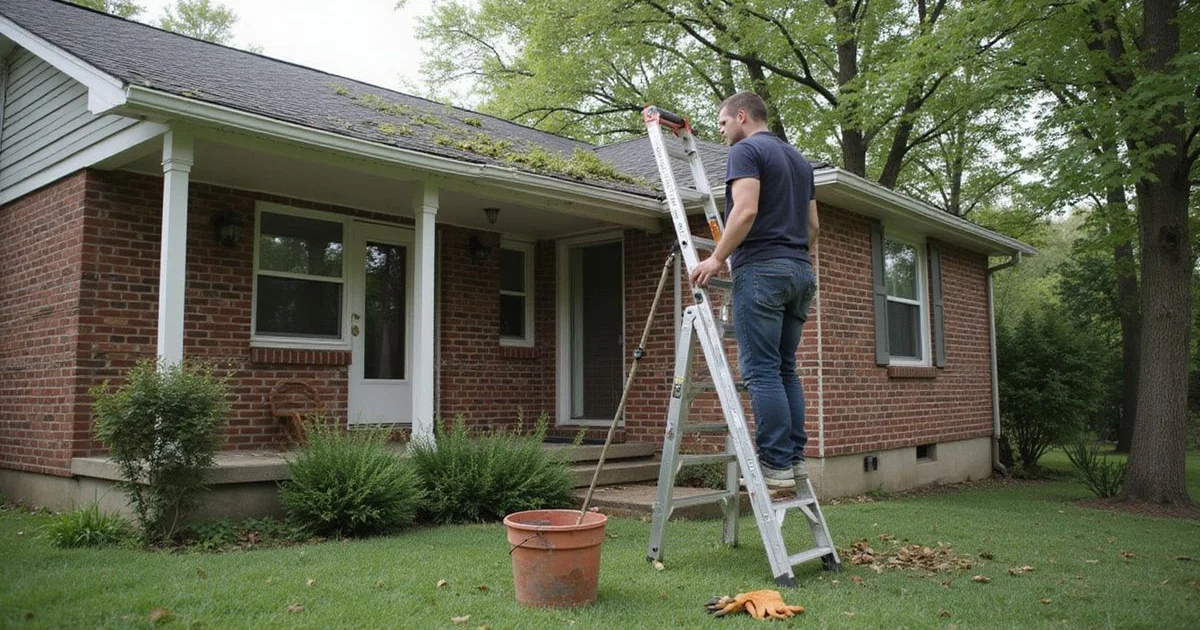
Clear the gutters properly, including the corners and the outlets. A gutter that overflows at the fascia delivers roof water straight down the wall and into the backfill zone, which is the most permeable soil around your house.
Then test each downspout. Pour a bucket of water down it and walk to the outlet to confirm the water arrives. This is the step people skip, and it is the one that catches the failures you cannot see: buried conductor lines that have crushed, clogged, or separated at a joint.
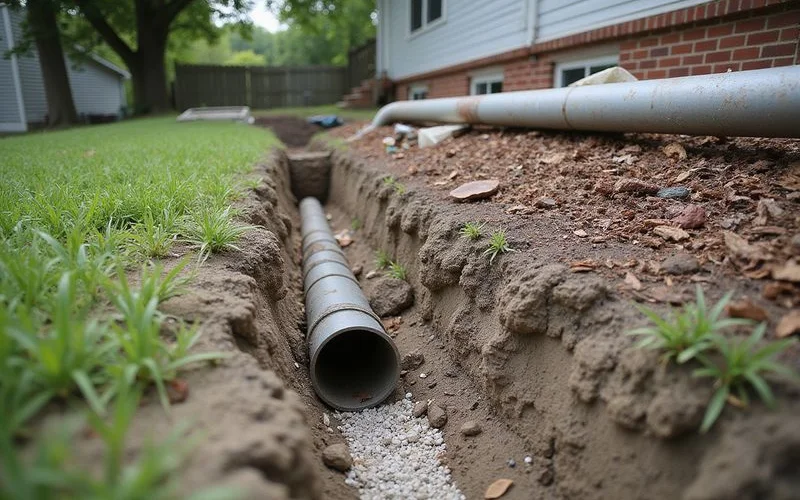
Check the outlets themselves. Pop-up emitters disappear under grass growth and mulch over two or three seasons, and an emitter that cannot open is a blocked pipe.
Walk the perimeter and look at the ground
Ground that falls toward the house delivers surface water directly to the foundation. Walk the full perimeter and note anywhere the grade runs the wrong way, anywhere water pooled after the last storm, and anywhere soil has eroded away.
Look at bed levels against the masonry. Mulch gets topped up year after year, and beds can end up holding moisture against the wall or reaching above the point where they should stop.
Check window wells for standing water and debris blocking their drains.
If you find something a load of topsoil will not fix, our drainage solutions page covers the work that does.
Test the sump before you need it
This one has a deadline attached to it, because the storms that stress a sump pump are the storms that take out power.
Lift the float by hand, or pour a bucket of water into the basin. Confirm the pump starts, moves water, and shuts off cleanly. Then go outside and confirm water is arriving at the discharge point — a pump cycling perfectly into a blocked line has done nothing.
Clear sediment from the basin. Check the check valve is holding, which shows as the basin refilling immediately after shutoff if it is not.
If you have a battery backup, test it by cutting mains power to the system, and check the battery’s age while you are there.
Check the crawl space humidity now
Summer is when crawl space humidity peaks in Middle Tennessee, and autumn is when the consequences become visible upstairs.
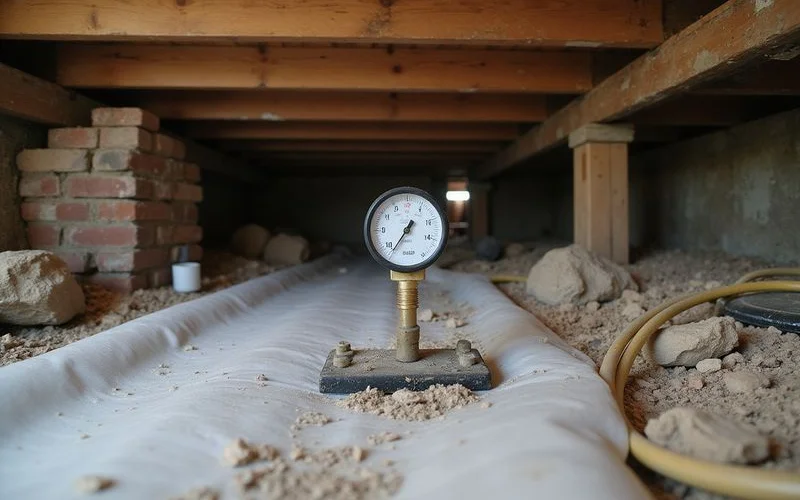
If yours is encapsulated, read the gauge. A reading that has drifted upward means something changed: a dehumidifier fault, a clogged condensate line, a torn liner, or a vent someone reopened.
If it is not encapsulated, look for condensation on framing and ductwork, damp ground, and musty odour reaching the living space. A cheap humidity gauge left down there for a week will tell you more than a glance will.
| Check | Frequency | Takes |
|---|---|---|
| Clear gutters and test downspout lines | Twice yearly | An afternoon |
| Walk the grading after rain | Seasonally | 15 minutes |
| Test the sump and backup | Before wet season | 10 minutes |
| Read crawl space humidity | Seasonally | 5 minutes |
| Photograph and date known cracks | Yearly | 20 minutes |
Record your cracks before the season, not after
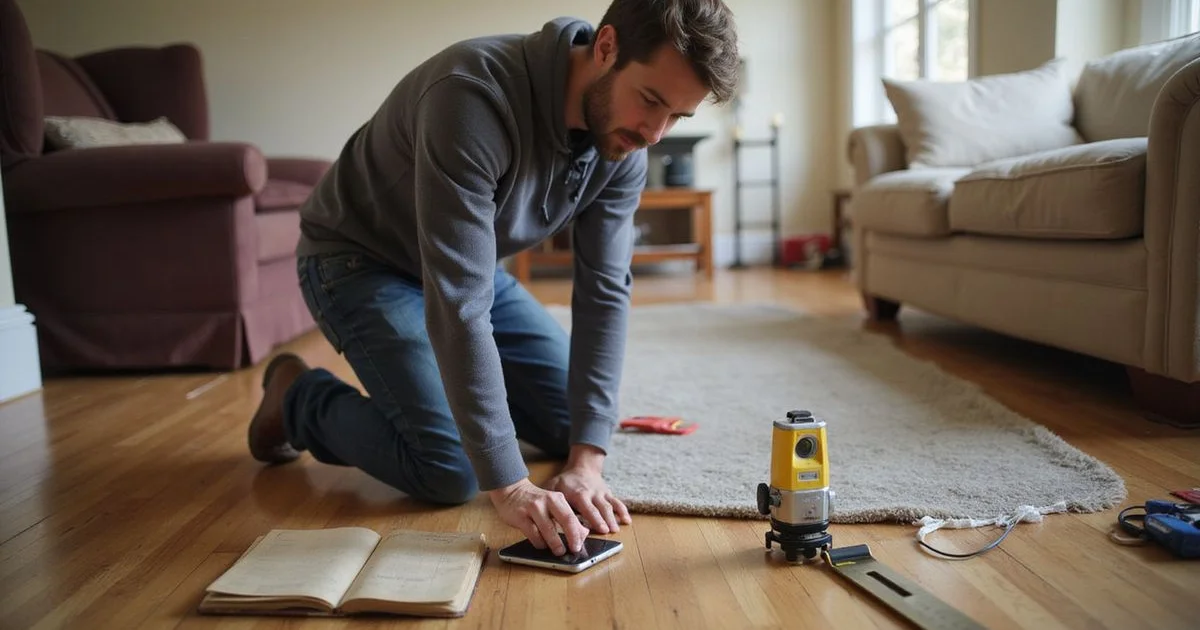
If you have cracks you are watching, photograph them now with a date and something in frame for scale, and mark the crack ends with a pencil.
A wet season is exactly when seasonal clay movement shows up, and a before-and-after record through one winter is worth more than any description you could give an evaluator later.
What to do if something turns up
Most of what this checklist finds is maintenance: a blocked line, a bed built too high, a pump that needs a new float. Fix those and you have removed the largest controllable driver of foundation problems on your property.
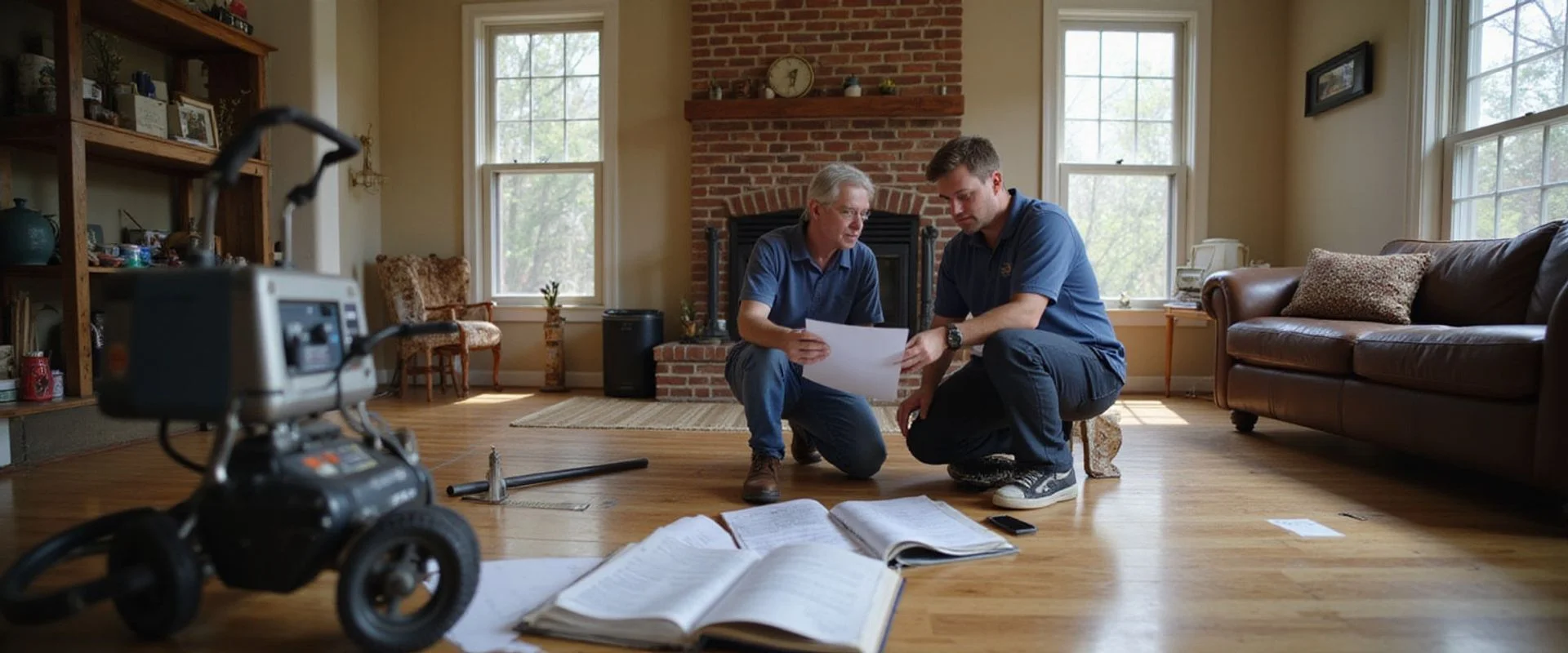
If you find water entering the basement, a crawl space with standing water, or cracks that have visibly moved since spring, that is worth having looked at before the ground stays saturated for months. That is the point at which foundation repair in Nashville stops being a maintenance question and starts being a measurement question.
Want the drainage side checked properly before the rain sets in? — Request a foundation repair quote and tell us what you found on your perimeter walk.