
The question worth asking first
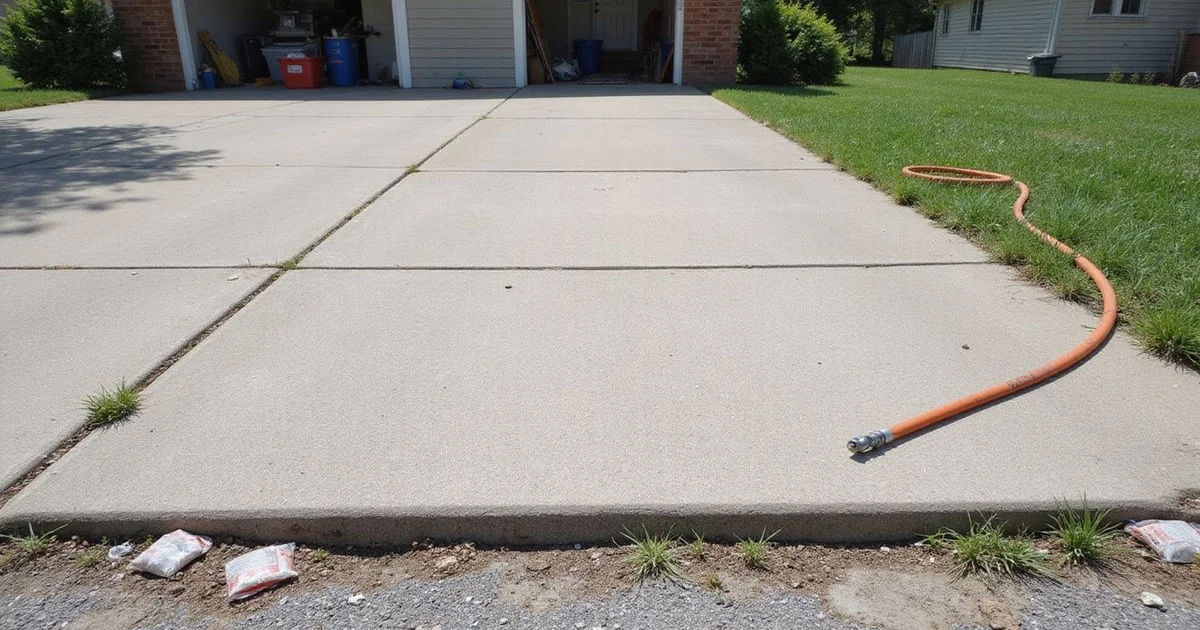
A settled driveway panel or walkway section looks like a replacement job to most homeowners, because that is the option they know about.
For eligible slabs, lifting is faster and considerably less expensive. The useful question is whether your slab qualifies.
What makes a slab a good lifting candidate
It is structurally intact. Cracked in one or two places is fine. Broken into many pieces is not.
It has adequate thickness. Thin slabs flex rather than lifting as a unit.
The surface is sound. No widespread spalling, scaling, or exposed aggregate from freeze-thaw and de-icing damage.
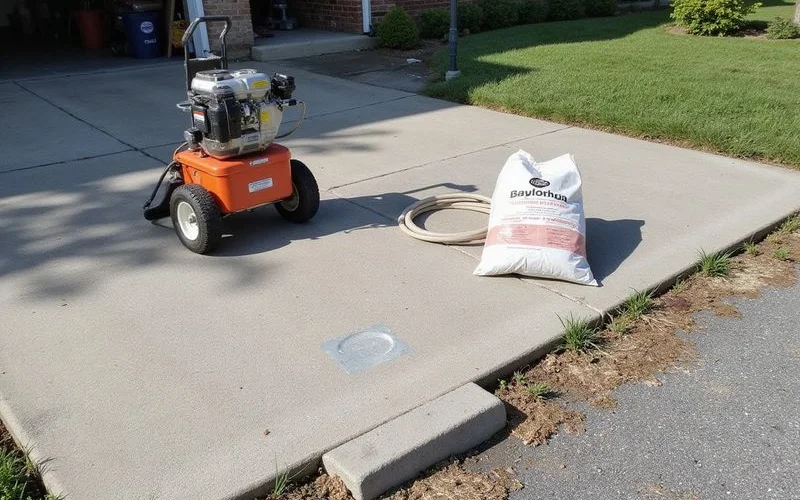
There is a void to fill. The slab dropped because support was lost beneath it, and the foam needs somewhere to go.
The cause can be addressed. Otherwise you are scheduling a repeat.
When replacement is the honest answer
Extensive cracking. A slab in many pieces cannot be lifted as a unit, and lifting it produces a raised broken slab.
Deterioration through the thickness. Crumbling, spalling, or badly scaled concrete has reached the end of its life. Raising it does not restore it.
Inadequate original construction. A slab poured too thin, on inadequate base, or without reinforcement will keep having problems.
Major elevation change. Where the required lift is very large, the void volume and the risk of cracking during the lift both increase.
A change in use. If a driveway now carries heavier vehicles than it was built for, replacement with an appropriate section may be the right investment.
The comparison
| Consideration | Leveling | Replacement |
|---|---|---|
| Relative cost | Substantially lower for eligible slabs | Higher |
| Duration | Usually hours | Days, including cure time |
| Return to service | Often same day with foam | Days before full use |
| Disruption | Minimal, small ports only | Demolition, removal, forming, pouring |
| Appearance | Existing surface retained, ports visible on close look | New surface, matching adjacent concrete can be difficult |
| Lifespan | Depends on addressing the cause | New slab life, if properly built on a sound base |
Appearance is a real factor
Leveling keeps the slab you have, including its existing colour, texture, weathering, and any cracks. The injection ports are patched and remain visible on close inspection, particularly on a smooth or coloured surface.
Replacement gives a new surface, but new concrete rarely matches adjacent older concrete in colour or texture. If only one panel of a driveway is replaced, that panel will look replaced.
Which of those bothers you more is a genuine consideration, not a trivial one.
The cause still decides durability
Both options are undermined by the same thing: water continuing to wash fines out from underneath.
For a lift, that means joint sealing and drainage correction belong in the scope. For a replacement, it means base preparation and drainage matter as much as the concrete.
Our drainage solutions page covers the water side.
And if it is not flatwork at all
If the slab in question is carrying your house rather than your car, this is the wrong comparison entirely. That is structural, and our guide on structural slab repair versus concrete leveling covers the distinction.
For eligible flatwork, the concrete leveling page explains the method, the eligibility assessment, and what drives the cost.