
Same name, two different jobs
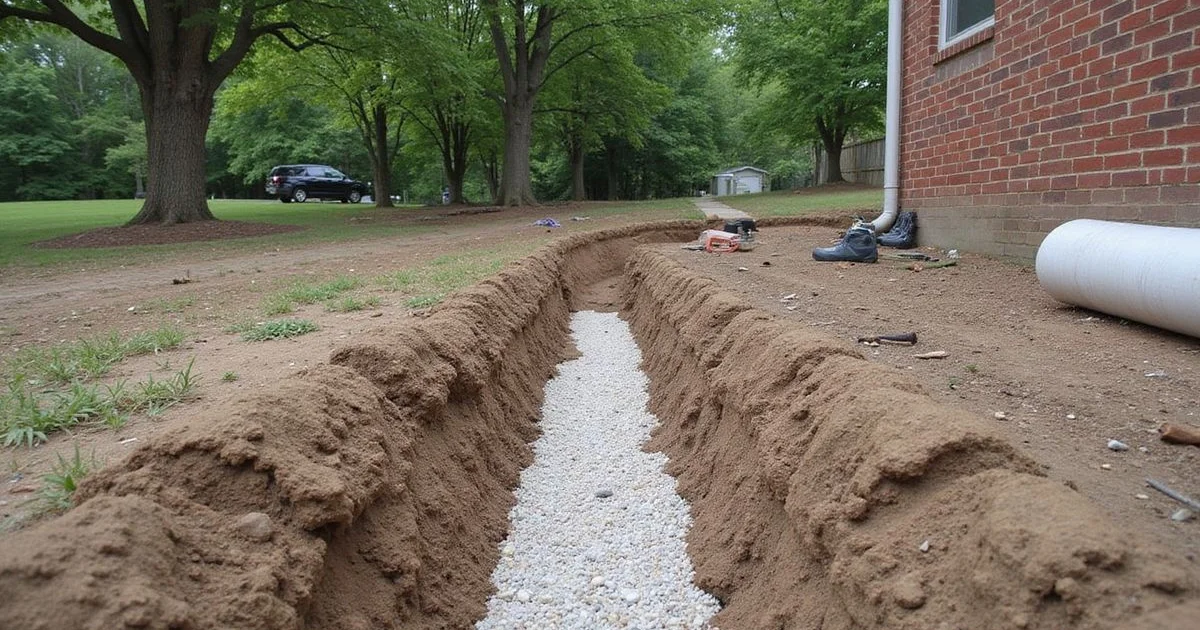
“French drain” describes a construction detail — perforated pipe in washed stone, wrapped in geotextile, sloped to an outlet. Where you put it determines what problem it solves.
Outside, it intercepts water moving through soil before it reaches the building. Inside, it collects water that has already arrived at the footing. These are different objectives and they are not interchangeable.
Exterior French drains
Where they go. In the yard, along a slope, across a wet area, or against the foundation at footing depth.
What they do. Intercept water travelling through the soil and carry it to a discharge point before it reaches the house or the low area you want dry.
Typical applications. A yard that stays saturated. Water arriving from an uphill neighbour or a slope. A wet area beside a driveway or patio. Perimeter interception at footing depth as part of exterior waterproofing.
Advantages. Addresses water at its source. No interior disruption. Can protect the foundation wall from sustained saturation.
Disadvantages. Excavation affects landscaping and hardscape. Weather-dependent. Blocked by driveways, patios, mature trees, property lines, and utilities. Deeper installations at footing level are substantially more expensive.
Interior French drains
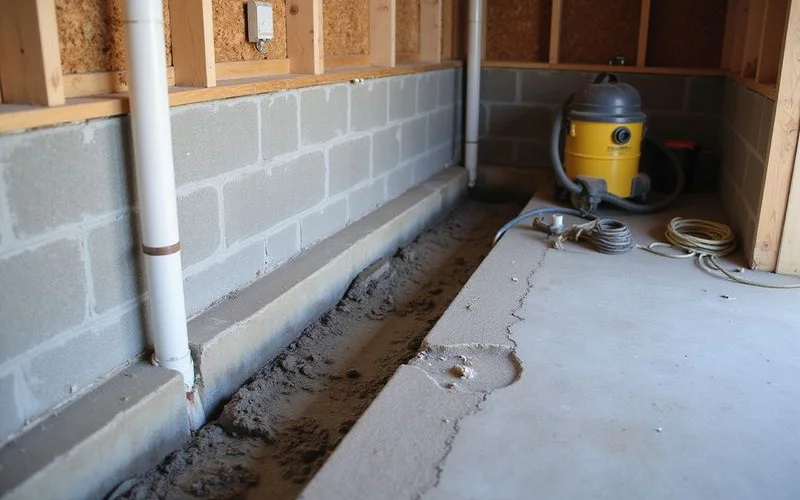
Where they go. In a channel cut into the basement slab at the footing line, around the affected perimeter.
What they do. Collect water reaching the inside of the footing and route it to a sump for discharge.
Typical applications. Basements with recurring water entry, particularly at the cove joint, where exterior work is impractical or disproportionate.
Advantages. Less expensive than deep exterior work. Not weather-dependent. No damage to landscaping. Works where exterior access does not exist.
Disadvantages. Water still reaches the wall and the backfill. Interior disruption from concrete cutting. Dependence on a pump, which needs power and maintenance.
How the water source decides
Surface water collecting in the yard is an exterior problem, and an exterior drain or regrading is the answer. An interior drain does nothing for a soggy lawn.
Water reaching the basement footing during wet periods is usually best managed by an interior system unless the site makes exterior interception practical.
Water arriving from a slope above the house calls for interception uphill — an exterior drain or swale — rather than managing it at the wall.
Roof water is neither. Correct the downspouts first, because no drain should be carrying uncontrolled roof runoff that a $40 extension could have redirected.
Design details that decide whether it works
Fall. Continuous slope to the outlet. A flat run holds water rather than moving it.
Stone. Washed, appropriately sized aggregate. Fines mixed into the stone defeat the void space the drain depends on.
Fabric. Geotextile keeping soil fines out of the stone. Omitting it is the most common reason a drain silts up.
Pipe. Perforated in the collection zone, solid through any run where infiltration is not wanted.
Outlet. Daylighted where grade allows, or to a sump where it does not. This is the part that decides everything.
The cheaper questions to ask first
Before either drain: are the gutters clear, do the downspouts discharge well away from the house, and does the ground fall away from the foundation?
Our guide on downspout extensions and catch basins covers that groundwork, and interior versus exterior basement drainage goes deeper on the basement-specific version of this comparison.
The drainage solutions page explains how we assess a site and design a route, including where the water will actually end up.