
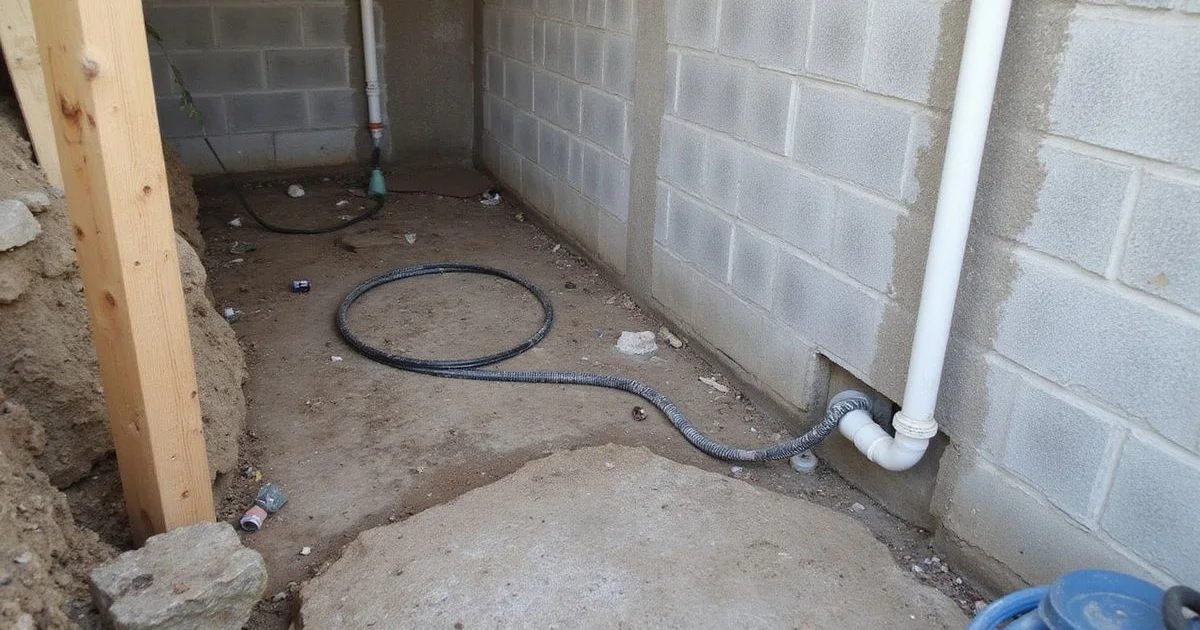
Two ways to deal with the same water
Interior drainage collects water that has reached the inside of the footing and routes it to a sump. Exterior work intercepts water before it reaches the wall at all.
Both are legitimate. The choice comes down to where the water is coming from, what access exists, what else is being done at the property, and budget.
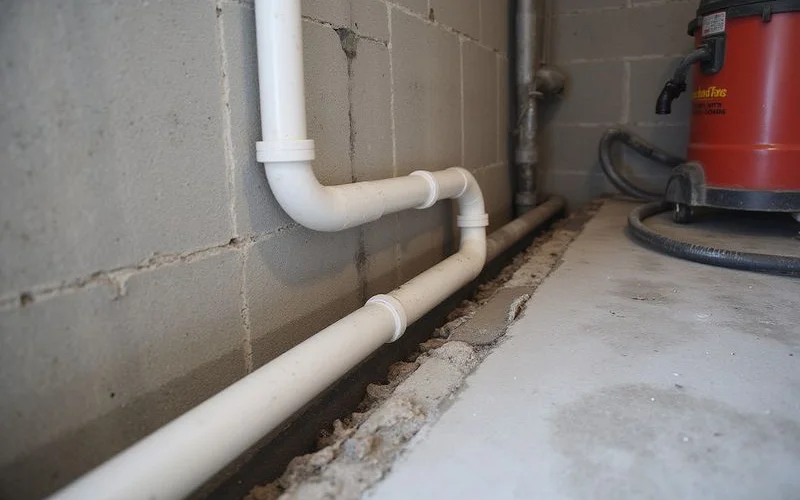
Interior perimeter drainage
What it is. A channel cut in the slab around the affected perimeter, perforated pipe in washed stone sloped to a sump basin, drainage board against the wall, a pump, and a discharge line.
What it does. Gives water reaching the footing a managed path out before it emerges at the cove joint. Relieves some hydrostatic pressure at the same time.
Advantages. Less expensive than exterior work. Not weather-dependent, so it can proceed year-round. Does not disturb landscaping, driveways, or patios. Works where exterior access is blocked.
Disadvantages. Water still reaches the wall and the backfill, which matters where the wall itself is deteriorating. Interior disruption — concrete cutting, dust, moving stored items, and possibly removing finished walls. Ongoing dependence on a pump, which requires power and maintenance.
Exterior excavation and membrane
What it is. Excavating to the footing on the affected elevation, cleaning and preparing the wall face, applying a waterproofing membrane or coating, installing dimple board and a footing drain in washed stone, and backfilling with attention to drainage.
What it does. Stops water reaching the wall, which is the original problem rather than its consequence.
Advantages. Addresses the cause. Protects the wall itself from sustained saturation. No pump dependency where gravity discharge is possible. Allows inspection and repair of the exterior wall face while it is exposed.
Disadvantages. Considerably more expensive. Landscaping, hardscape, and access are affected. Weather-dependent. Constrained by driveways, patios, additions, mature trees, and property lines. Utilities in the excavation zone add complication.
How the water source points to an answer
Clear exterior origin — a downspout at the wall, a grade falling toward the house, runoff from uphill — often resolves with drainage correction alone, before either system is needed.
Groundwater reaching the footing during sustained wet periods usually suits interior drainage, because the water is arriving from below and the objective is relief rather than interception.
Sustained saturation of the backfill affecting the wall itself points toward exterior work, particularly where the wall is deteriorating or being stabilized anyway.
Practical factors that decide it
Access — a wall against a property line or under a driveway makes exterior work impractical regardless of what would be ideal.
Whether the basement is finished, which raises the cost of interior work.
Whether other exterior work is already planned, since excavation is cheaper as part of a larger project than as a standalone.
Budget, honestly stated. Interior is usually the affordable answer, and affordable answers that work are legitimate.
The correction that comes before both
Gutters, downspout discharge, and grading. A system designed around uncorrected roof runoff is designed around a problem you could have removed for a fraction of the cost.
Our guide on why is my basement wet covers the diagnostic sequence, and how interior drainage and sump systems work explains the interior option in detail.
Getting a recommendation
The basement waterproofing page explains how we assess water entry and match a system to the source — including the cases where the answer is a downspout extension and a note to check again after the next few storms.