
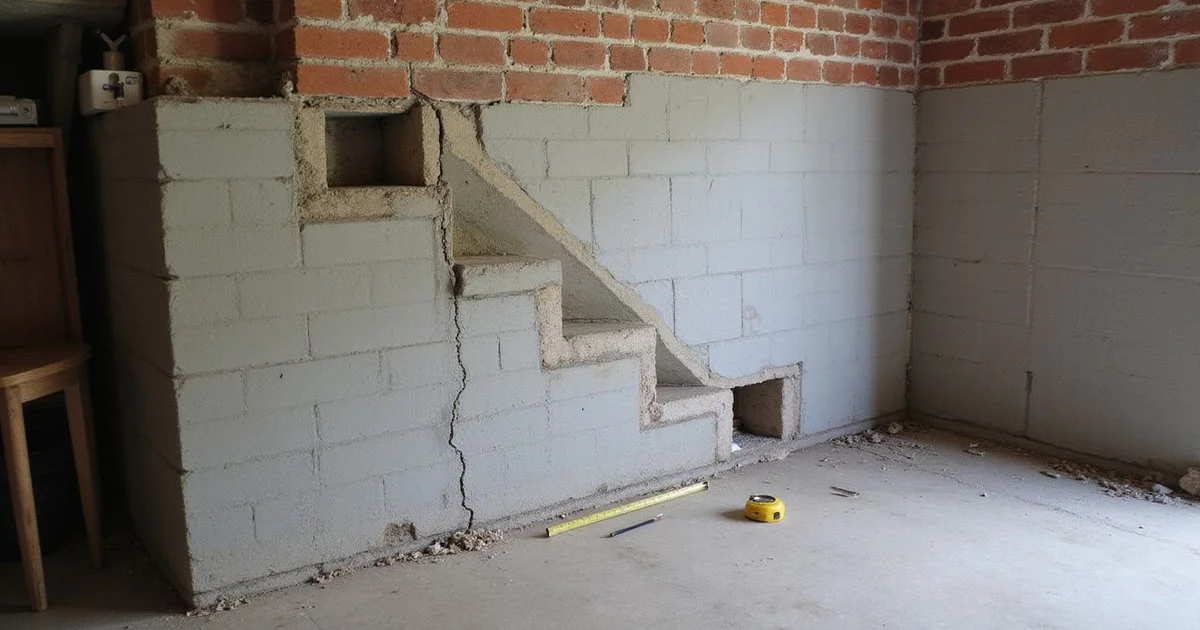
Why a crack alone does not tell you much
A basement wall crack is information, not a verdict. Almost every basement in Middle Tennessee has one somewhere, and the majority are not structural emergencies. What separates a note-and-monitor crack from a call-someone crack is orientation, location, width, and whether it is changing.
That last one is the piece homeowners usually lack, because nobody thought to write down when the crack appeared. It is also the piece that matters most.
Reading crack orientation
Vertical cracks. In poured concrete walls, vertical cracks frequently relate to concrete shrinkage during curing, and they are often the most benign type. They can still admit water, and where they do, that is a water problem rather than a structural one.
Horizontal cracks. A crack running horizontally along a mortar bed in a block wall, usually somewhere around the mid-height, is the one that earns closer attention. It is the pattern associated with lateral pressure from the soil outside, and it often accompanies measurable inward deflection.
Stair-step cracks. These follow the mortar joints diagonally through a block wall. They commonly reflect differential movement, meaning one section of wall or footing has moved relative to another.
Diagonal cracks at openings. Corners of basement windows and door openings concentrate stress, and cracks radiating from them are common. Whether they matter depends on width and progression.
What to measure, and how
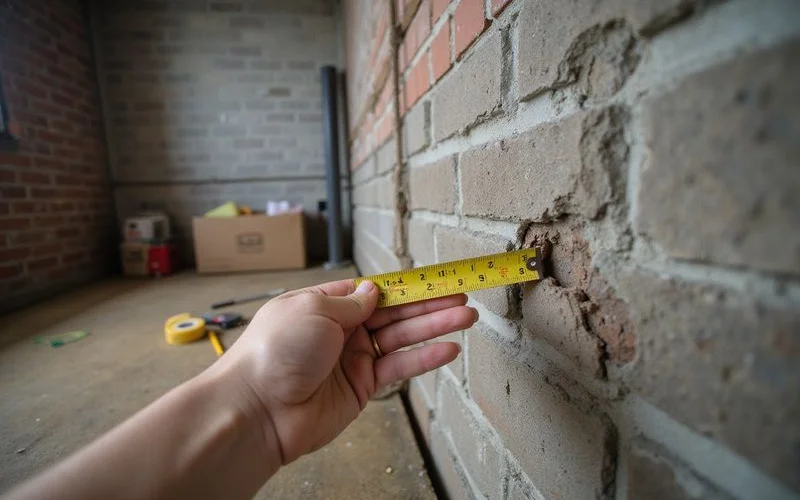
Take a photograph with a tape measure, a ruler, or a coin held in frame beside the crack. Note the widest point. Mark the end of the crack with a pencil line and write the date next to it. Do the same in six months.
If you want something more precise, a crack monitor is an inexpensive plastic gauge that mounts across a crack and shows displacement on a grid. It is the simplest way to turn “I think it got bigger” into a number.
Also note what the wall does in three dimensions. Hold a straightedge or drop a plumb line against it. A crack in a wall that is still plumb is a different situation from the same crack in a wall that has moved inward.
Water signals versus structural signals
Two different stories often share a basement, and they get conflated constantly.
Water signals include staining below or beside a crack, efflorescence — that white mineral bloom left as water evaporates out of masonry — dampness along the wall-floor joint, and wetting that appears after rain and dries between events.
Structural signals include measurable inward deflection, horizontal cracking along a mortar bed, displacement where one side of a crack sits proud of the other, and companion symptoms elsewhere in the house such as binding doors above the affected wall.
A wall can show water signals and no structural ones, which is common and points toward drainage and waterproofing rather than stabilization. It can show both, which usually means the water is driving the movement.
Why a photo cannot diagnose a wall
Photographs flatten the two pieces of information that matter most: how far the wall has moved, and whether it is still moving. Both require something physical held against the wall and a record over time.
That is why remote diagnoses tend to be unreliable in both directions. Some produce alarm over a shrinkage crack; others dismiss a horizontal crack that deserves attention. Neither is doing the thing that resolves the question.
For a fuller breakdown by crack type, see our guide on types of basement wall cracks.
What the next step looks like
If the crack is stable, thin, vertical, and dry, record it and check again next season.
If it is horizontal, if the wall is out of plumb, if the crack has visibly widened, or if water is entering through it, an evaluation is worth booking. A basement wall repair assessment measures deflection against a straightedge, records crack characteristics, checks the drainage conditions outside the wall, and tells you whether the situation calls for stabilization, waterproofing, or nothing beyond continued monitoring.
Whatever the answer, you will have numbers to compare against next year — which is more than most homeowners have when the question comes up again.