
Exterior and interior clues usually arrive together
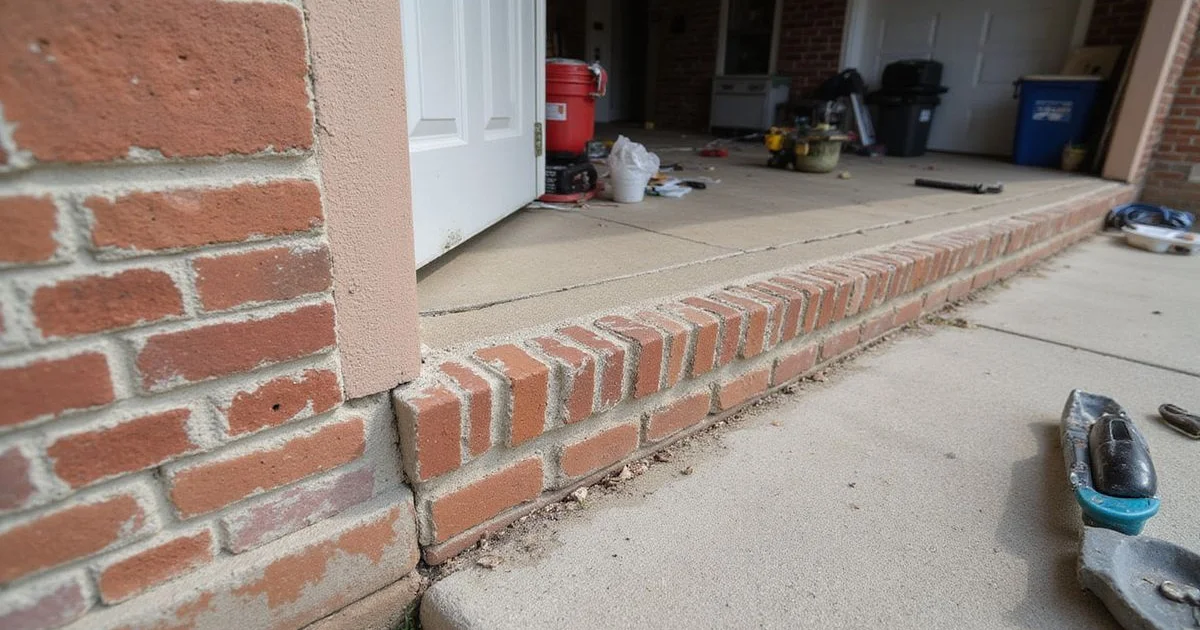
Brick veneer is a good movement indicator. It is rigid, it is brittle, and it shows differential movement clearly as cracking along the weakest path — the mortar joints.
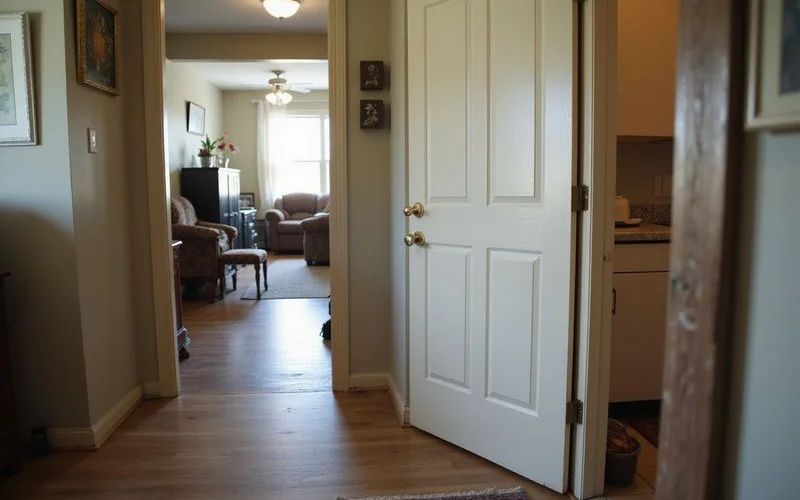
Doors and windows are the interior version of the same instrument. A door hangs in a frame that assumes the opening stays square. When the structure moves, the opening racks, and the door tells you.
When both appear in the same part of the house over the same period, they are usually describing the same event.
Reading stair-step cracking
A stair-step crack runs diagonally through brick veneer by stepping along the horizontal and vertical mortar joints. It follows mortar because mortar is weaker than brick.
Its direction carries information. The crack generally widens toward the settling side, so a stair-step crack that opens wider at the bottom near a corner suggests that corner has dropped relative to the rest of the wall. One that opens wider at the top suggests the opposite.
Location matters too. These cracks concentrate at points of stress: outside corners, garage openings, the junction where a one-storey section meets a two-storey section, and above windows.
Lintel separation
Above a garage door or wide window, a steel lintel carries the brick. Two things commonly show there.
The veneer settles with the structure, opening a horizontal separation under the lintel. Or the steel lintel itself corrodes, and because rusting steel expands, it lifts the masonry above and cracks it. The second one is a masonry maintenance issue rather than a foundation issue, and telling them apart matters before anyone proposes piers.
Why doors and windows bind
Two entirely different mechanisms produce the same complaint.
Humidity swells wood. In a Middle Tennessee July, doors and jambs take on moisture and the door binds at the top or along the latch edge. In February it closes cleanly again. This is ordinary and requires no foundation work.
Structural movement racks the opening. The gap between door and jamb becomes visibly uneven — tight at one corner, wide at the diagonal opposite. Binding persists regardless of season, and it usually worsens rather than cycling.
Our guide on sticking doors: humidity versus settlement sets out the checks that distinguish them.
What to record
Photograph each crack with a tape measure or coin in frame. Note where it is on the house, using a landmark you will recognise later. Record the widest point.
Mark the end of the crack with a pencil and date the mark. Cracks travel, and a dated mark is the cheapest progression record available.
For doors, note which corner is tight, whether the gap is uneven, and what month it is. Check the same door in the opposite season.
Photograph the full elevation as well as the close-up, so an evaluator can see where the crack sits relative to openings and corners.
What these signs do not prove
A stair-step crack does not confirm that piers are needed. Brick veneer is a cladding, not a structural element, and it cracks in response to relatively modest differential movement. Some of what it reports is historic movement that stopped years ago.
Nor does it identify a cause. Settlement at a corner can come from consolidating fill, from washout caused by a downspout, from clay shrinking through a dry summer, or from a footing bearing on inconsistent material. Those have different remedies and very different costs.
The next step
Record what you see, then have it measured. A foundation evaluation maps relative floor elevations inside, characterises the exterior cracking, and walks the perimeter to see where water is going.
If the elevation readings are essentially flat and the crack is hairline and old, the honest finding is monitoring. If the readings show a consistent fall toward the cracked corner, you have a structural conversation — and now you have numbers to have it with.