

Scope first, price second
Every homeowner researching this topic wants a number. The honest answer is that a number without a scope attached is not information, and on this site we would rather explain the variables than publish a figure that will mislead you.
Foundation repair cost varies by an order of magnitude between projects that sound identical over the phone. Two houses on the same street, both with a settled corner, can land in very different places depending on depth to bearing material, access, and what restoration is required.
The variables that actually move the number
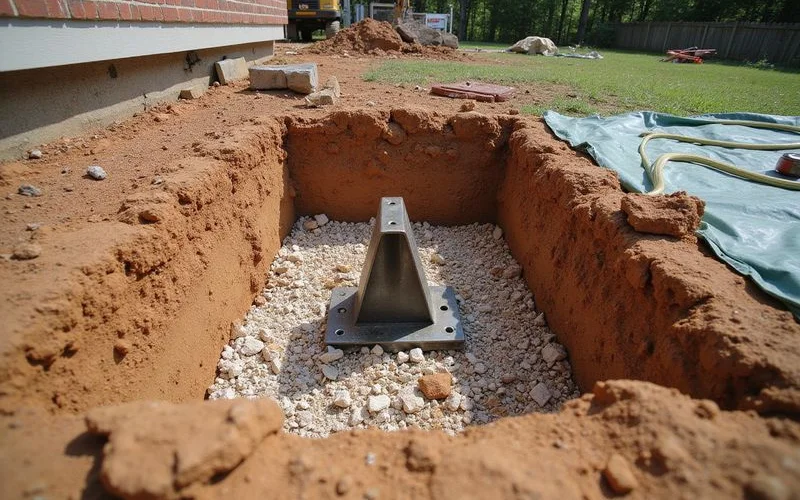
Access. The single most underrated driver. An open side yard where a machine can work is a different project from a three-foot gap against a property line where every cubic yard moves by hand. Access affects labour hours more than any other single factor.
Affected area. How much of the structure is involved. A single corner is not the same job as two full elevations.
Repair system. Underpinning, wall stabilization, drainage, and leveling occupy completely different price bands. Which one you need is an engineering question, not a budget question.
Support count and depth. For underpinning, both matter, and depth in Middle Tennessee is genuinely variable because depth to competent bearing material changes across a lot. More depth means more material and more time.
Wall configuration. For wall work, height, construction type, and the length requiring reinforcement all bear on it.
Drainage length. For drainage and waterproofing scopes, linear feet of pipe and trench is the primary quantity.
Excavation and disposal. Soil moved is soil that has to go somewhere. Volume, haul distance, and disposal all carry cost.
Permits. Where required, permit fees and the coordination time around inspections.
Engineering. Where a stamped design or an independent report is required, that is a separate professional cost.
Utilities. Locating, protecting, or relocating buried services adds time and risk.
Restoration. Landscaping, hardscape, driveway sections, interior finishes. This is the line most frequently left out of a cheap-looking quote.
Follow-up work. Return visits for adjustment, verification, or monitoring, where the scope includes them.
Why depth is unpredictable here
Middle Tennessee’s limestone surface is irregular. Depth to competent bearing material can change substantially within a single property, and shallow rock at one corner tells you very little about the opposite corner.
That is why a responsible proposal states its depth expectation as an assumption with a stated basis, and explains how additional depth is handled if the site requires it. An installer who promises a fixed depth before installation is either guessing or has a contingency you have not been shown.
Our standard for publishing figures
We will publish a price figure when it carries the context that makes it meaningful: the date it applies to, the source it came from, the scope it covers, the unit it is expressed in, and what it excludes.
Company averages carry an additional requirement: a sample size and a timeframe. “Our average project is X” is meaningless without knowing across how many projects and over what period.
Absent reliable, well-sourced local figures that meet that standard, we explain drivers instead. That is a deliberate choice, and it is the reason this guide reads the way it does.
Where the money usually goes
Across the residential projects we scope, labour and access dominate. Materials matter, but the difference between an easy site and a constrained one is frequently larger than the difference between two pier systems.
Restoration is the second surprise. The excavation itself is priced readily enough; putting the yard, driveway, or basement finish back is where quotes diverge sharply, because some include it and some do not.
How to compare quotes fairly
Put the proposals side by side and compare the problem each one describes before comparing any numbers. If they describe different problems, at least one has the cause wrong.
Then compare quantities, access assumptions, exclusions, permit and engineering responsibility, cleanup, payment stages, change order terms, and warranty. Our guide on comparing repair quotes provides the full checklist.
A quote that is 30% cheaper with half the quantities and no restoration is not cheaper. It is a different project.
Getting a real number for your property
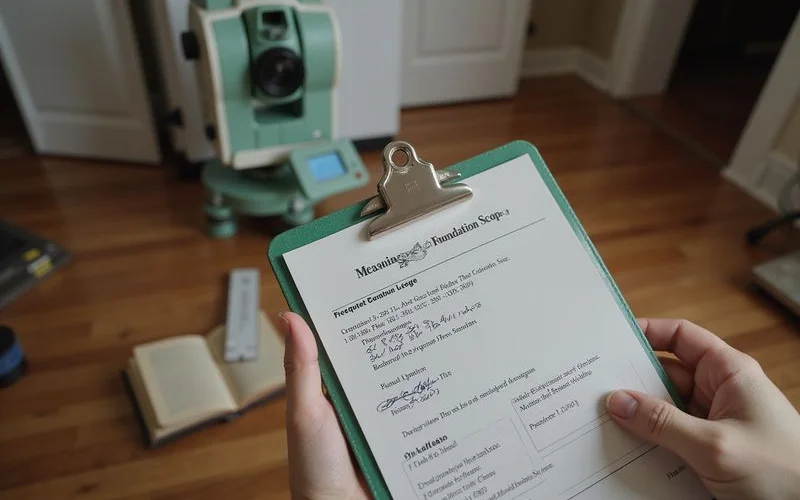
The route to an accurate figure is an on-site evaluation that records the conditions, followed by an itemized written scope. A foundation evaluation produces both, and any evaluation charge is explained before we schedule the visit.
If the measurements come back showing that drainage correction is the honest answer rather than structural work, that is what the scope will say — and that outcome is considerably more common than the industry’s advertising suggests.