

Two different roles, often confused
A foundation contractor evaluates conditions, proposes a scope, and performs the work. A structural or geotechnical engineer analyses the structure or the ground, produces an independent opinion, and where required, provides a stamped design.
Homeowners frequently assume these are competing options. They are complementary, and they overlap less than the internet suggests.
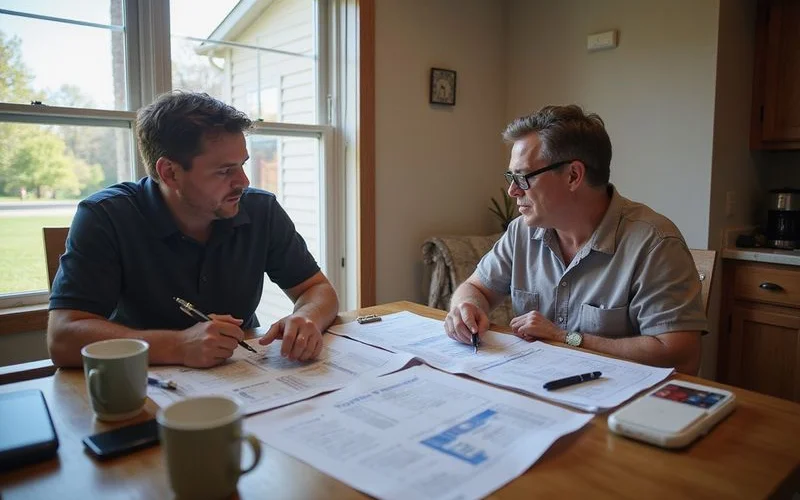
What a contractor evaluation does
A contractor evaluation records what is visible and accessible: relative floor elevations, crack characteristics, moisture conditions, drainage and grading, and the structure’s construction type. It produces written findings and, where repair is warranted, an itemized scope with quantities and exclusions.
It is practical, it is usually quicker to arrange, and it is oriented toward “what would fixing this involve”.
Its limitation is structural: the party doing the assessment is the party who would do the work. Where estimators are compensated on commission, that creates an obvious incentive, and it is the reason the skepticism you find on homeowner forums exists.
We address that directly by not paying estimators on commission and by recording measurements you can check. It does not eliminate the structural point, but it removes the financial one.
What an independent engineer adds
An engineer is retained by you, not by the company doing the work, and produces an opinion without a stake in the outcome.
That matters most in a few specific situations:
- Complex or unusual conditions, where the mechanism is unclear or multiple causes interact.
- Disputed situations, where two contractors disagree substantially about cause or scope.
- Transactions, where a buyer, seller, lender, or insurer needs a third-party assessment.
- High-stakes decisions, where the proposed repair is large and you want independent confirmation before committing.
- Required design, where the jurisdiction requires stamped structural plans for the work.
- Subsurface questions, where borings or geotechnical investigation are needed — that is a geotechnical engineer’s territory rather than a structural one.
An engineer’s report is typically diagnostic and specification-oriented. It may say what is happening and what needs to be achieved, without naming a contractor or a product.
How they work together in practice
A common and sensible sequence: contractor evaluation first, because it is accessible and often sufficient. If the findings are straightforward and the scope is proportionate, proceed.
Where the findings are complex, the scope is large, or you simply want independent confirmation, engage an engineer at that point. The contractor’s measurements give the engineer a starting point; the engineer’s report gives you a basis against which to compare proposals.
On projects where stamped design is required, the engineer’s drawings define what gets built and the contractor executes them. That is not a competition, it is a division of responsibility.
Being honest about the limit of our role
There are questions a contractor evaluation should not answer alone, and we say so when we reach them.
Whether a subsurface void exists requires investigation we do not perform. Whether a structure is unsafe to occupy is a determination beyond an evaluation’s scope. Whether a specific under-slab plumbing leak is the cause requires a plumber with camera and pressure testing equipment. Whether a mapped karst feature affects a specific property requires geotechnical work.
Stretching a contractor evaluation across those lines is how homeowners end up with confident answers to questions nobody actually investigated.
What this means for your next step
If you have a symptom and no diagnosis, a foundation evaluation is a reasonable and low-friction starting point, particularly one that records measurements and states its own limits.
If you already have conflicting proposals, read our guide on comparing repair quotes first — sometimes the disagreement resolves itself once you compare scopes properly, and sometimes it points clearly to needing an independent opinion.
And if the situation is complex, disputed, or tied to a transaction, engaging a licensed professional engineer directly is a sound investment rather than an extravagance.