
Why square footage alone tells you very little
Encapsulation is often priced per square foot, which makes it look comparable between quotes. It is not, because two 1,400-square-foot crawl spaces can require completely different amounts of labour.
Here is what actually moves the number.
The drivers
Area and perimeter. Ground coverage scales with square footage; wall and pier coverage scales with perimeter and pier count. A long, narrow crawl space has more perimeter per square foot than a square one.
Liner specification. Thickness, reinforcement, and how far the liner runs up walls and piers. A reinforced 20-mil liner run to the sill costs more than light sheeting stopped at the wall base, and it performs differently.
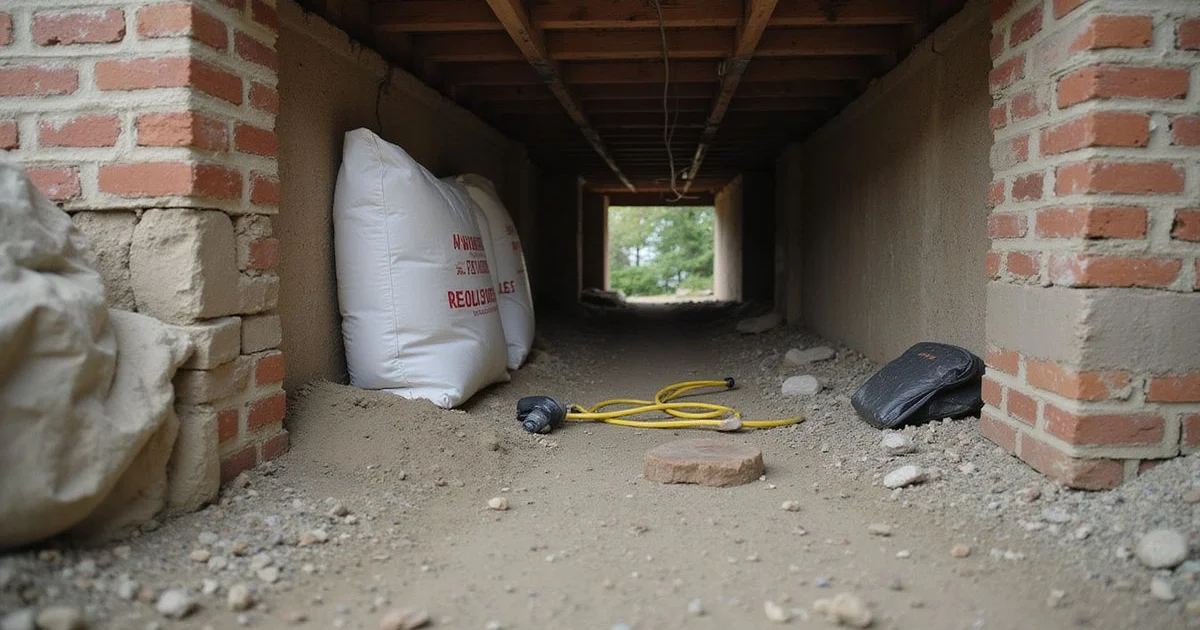
Access. The variable most underestimated. Height, hatch size, and travel distance underneath determine how material gets in, how quickly crews can work, and how physically demanding the job is. An eighteen-inch crawl space with a small interior hatch is a different job from a four-foot one with an exterior door.
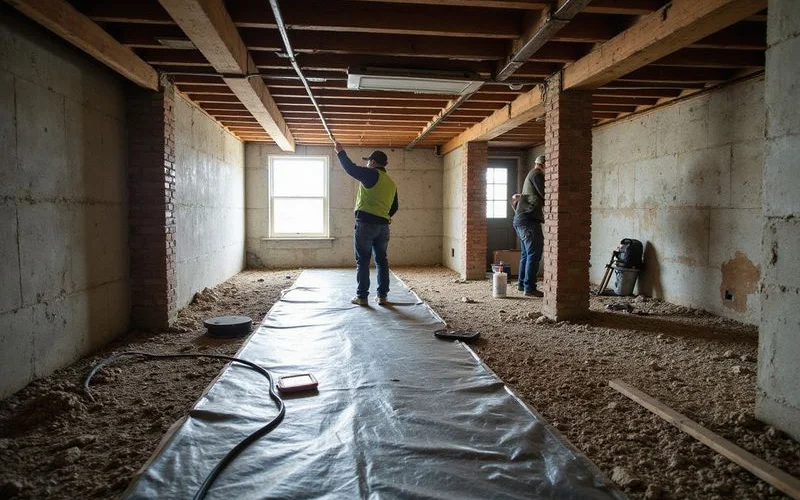
Site preparation. Debris removal, old torn sheeting, grading the ground surface, and clearing anything that would puncture the liner.
Drainage. Where liquid water enters, collection and discharge go in before the liner. That may be a perimeter drain, a sump basin and pump, or exterior correction.
Dehumidifier. Capacity matched to the sealed volume and moisture load, plus condensate routing by gravity or pump.
Penetrations and piers. Each one needs detailing. A crawl space with many piers and a lot of plumbing takes longer than an open one.
Insulation, if included. Wall or rim joist insulation where the property calls for it.
Structural repairs. Not encapsulation cost as such, but frequently discovered and quoted alongside it, and best done before sealing.

Where quotes diverge
Three lines explain most of the variation between competing proposals.
Liner coverage. Ground only, or ground plus walls plus piers. Very different material and labour.
Whether a dehumidifier is included. Some quotes list it; some assume you will add one; some omit it silently.
Whether drainage is in scope. A crawl space with a water problem needs drainage before sealing, and a quote that skips it will produce a liner with water underneath.
Read the exclusions. That is where these differences live.
Our standard for publishing figures
We publish a price figure only with the context that makes it meaningful: a date, a source, the scope it covers, the unit it is expressed in, and its exclusions. Company averages additionally need a sample size and a timeframe.
Without figures that meet that standard, we explain drivers. That is why this guide contains no dollar amounts, and it is a deliberate choice rather than an oversight.
The cheaper alternative, stated honestly
A ground vapor barrier alone costs a fraction of full encapsulation and genuinely helps in moderate conditions. It is not equivalent, and it will not hold a humidity target, but it is a legitimate intermediate step.
Our guide on encapsulation versus a ground vapor barrier sets out where the line sits, and encapsulation versus a dehumidifier alone explains why a dehumidifier without sealing tends to disappoint.
Getting a real number
The route is an assessment of the actual space: measurements, humidity and wood moisture readings, ground conditions, access, and any water source. From that comes an itemized scope with quantities and exclusions written down.
The crawl space encapsulation page explains what a complete system includes and how we scope it, and what crawl space encapsulation includes covers the components in detail.