
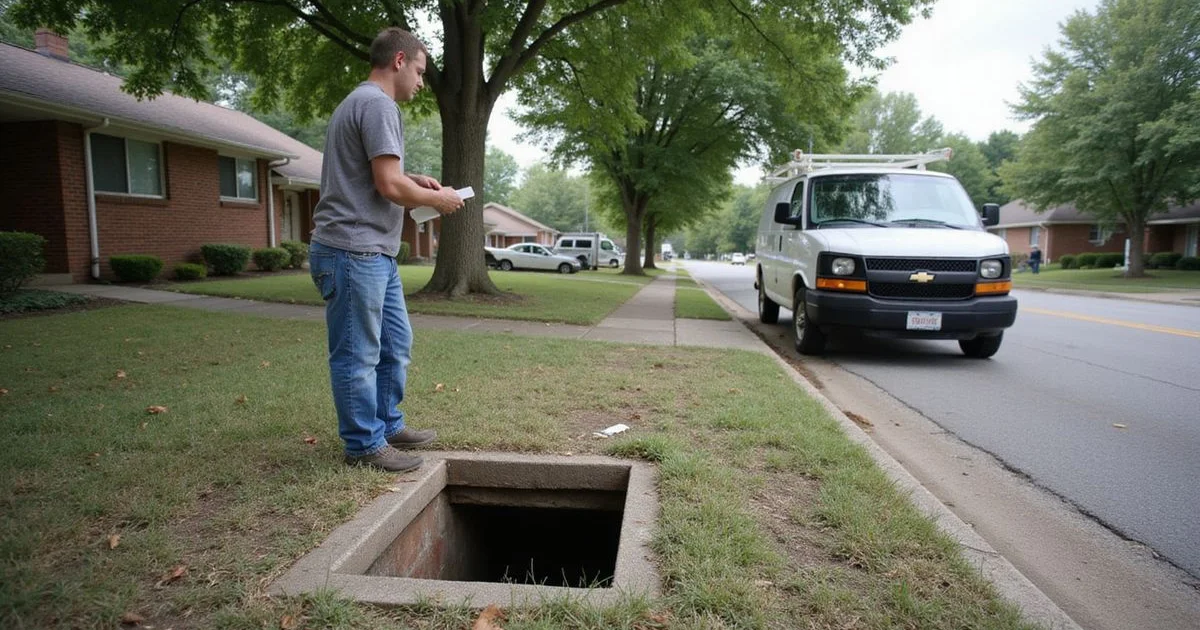
The instinct is reasonable, and it usually fails
Buying a dehumidifier is cheap, quick, and reversible. It is a sensible first thought, and homeowners who try it are not being foolish.
It just does not tend to work in an unsealed Middle Tennessee crawl space, and the reason is worth understanding before spending money on it.
Why venting works backwards in this climate
The traditional design logic behind crawl space vents is that outside air will carry moisture away.
That assumes the outside air is drier than the crawl space air. Through a Middle Tennessee summer, it frequently is not — at least not in the way that matters. Warm, humid outdoor air enters a crawl space that sits cooler than the outside temperature. As that air cools, its relative humidity rises, and when it reaches surfaces at or below its dew point, it condenses.
The result is that ventilation delivers moisture to the coolest surfaces under your floor: joists, ductwork, and the ground.
Why a dehumidifier alone struggles
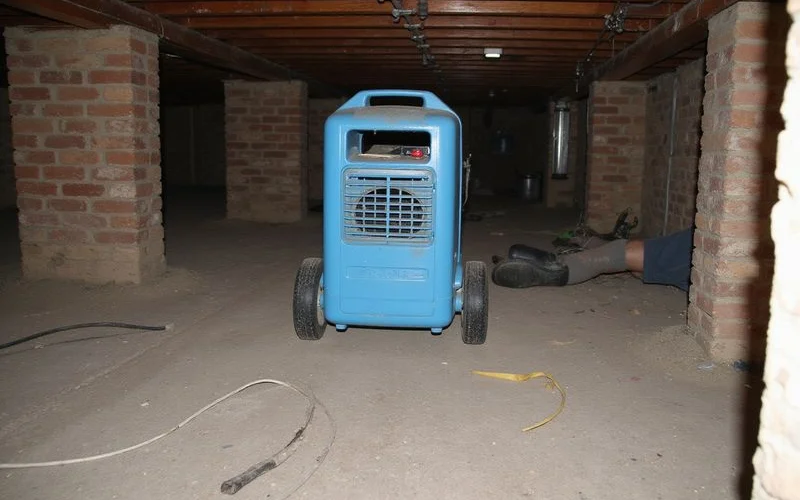
A dehumidifier removes moisture from air. In a closed volume, that works well. In a space with open vents, it is dehumidifying the outdoors.
Practically, three things happen. The unit runs continuously and rarely reaches its setpoint. Operating cost rises accordingly. And the unit works harder for a shorter service life.
Add the second moisture source — bare earth releasing ground vapor continuously — and the supply side of the equation is essentially unlimited.
What sealing changes
Sealing the ground, the walls, the vents, and the access converts the crawl space into a defined volume with a limited moisture load.
Now the dehumidifier has a finite problem. It cycles rather than running constantly, holds the target reliably, uses less energy, and lasts longer. Modest capacity becomes sufficient where large capacity previously was not.
That is the entire argument for the combined system: sealing reduces the load, and the dehumidifier handles what remains. Our guide on crawl space dehumidifier sizing covers how capacity gets matched to a sealed space.
What a dehumidifier alone can achieve
Some improvement, in some conditions. A crawl space that is only moderately damp, in a relatively dry site, with a partial ground barrier already in place, may see a measurable reduction.
If you want to try it, do it with a gauge. Put a humidity reader in the space, run the unit through a summer, and see whether the number comes down and stays down. That is a real test, and it costs very little.
What you should not do is run an unsealed crawl space dehumidifier for three years, assume the problem is managed, and discover decayed framing later.
The order that actually works
- Resolve bulk water — standing water, drainage faults, plumbing leaks.
- Repair structural damage while access is good.
- Seal the space: ground, walls, piers, seams, vents, access, penetrations.
- Add dehumidification sized to the sealed volume.
- Verify with a gauge.
Steps three and four are the ones that only work together.
Where to start
Measure first. A humidity gauge left in the crawl space through a humid stretch gives you the number that drives the decision, and it costs less than dinner.
If it reads consistently high, our guide on what crawl space encapsulation includes sets out what a full system involves, and the crawl space encapsulation page explains how we assess and specify one.