
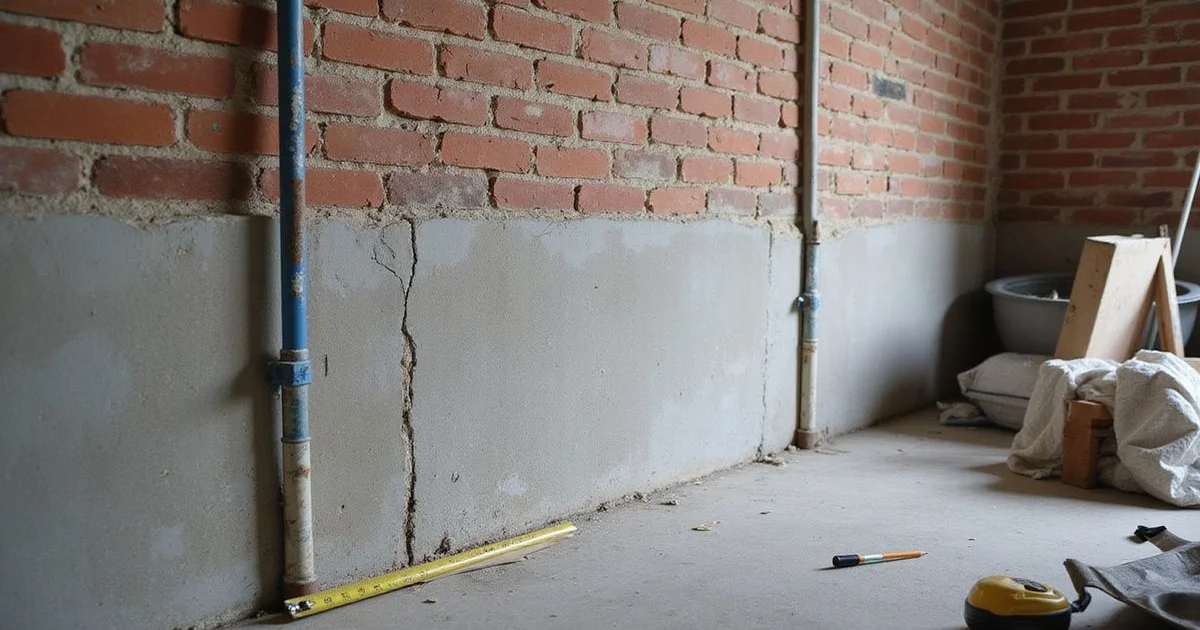
Two materials for two different objectives
Crack injection is a family of repairs where liquid resin is pumped into a crack through surface-mounted ports, filling it from the inside. Two materials dominate residential work, and they are used for different reasons.
Epoxy is a rigid structural adhesive. Polyurethane is a flexible sealant that expands on contact with moisture. Choosing between them starts with what you want the repair to accomplish.
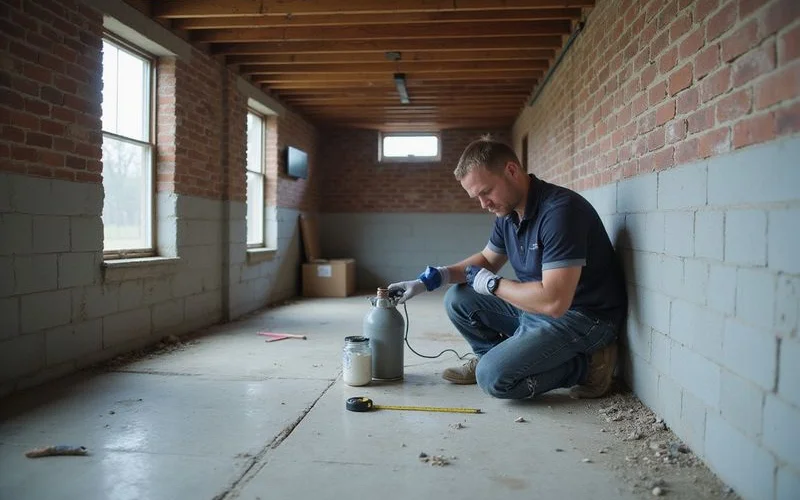
Epoxy injection: structural bonding
Epoxy cures rigid and strong, and when properly injected it bonds the two faces of a crack together.
Used when the objective is to restore some structural continuity across a crack in sound concrete, and the crack is not expected to move again.
Conditions it needs. A dry or near-dry crack, because moisture interferes with bond. Clean crack faces. A crack that is dormant, since a rigid repair in a moving crack simply cracks again, often right beside the repair.
What it does not do. It does not strengthen a wall beyond the crack, and it does not resist ongoing lateral pressure.
Polyurethane injection: water sealing
Polyurethane reacts with moisture, expands, and cures into a flexible seal that fills irregular voids and follows the crack’s geometry.
Used when the objective is to stop water entering through a crack.
Conditions it suits. Wet cracks, because moisture assists the cure. Cracks that may still see minor movement, because flexibility tolerates it.
What it does not do. It adds no structural capacity. It is a water repair.
Choosing between them
Ask what the crack is doing.
If it is leaking and the wall is otherwise sound and stable, polyurethane addresses the actual complaint.
If it is a dormant structural crack in concrete and restoring continuity is the objective, epoxy is the candidate — with a professional assessment of whether that is the right aim.
If the wall is actively moving, the real answer is neither. Stabilization comes first, because sealing a crack in a wall that is still deflecting is a repair with a countdown attached.
Why sealing alone is not stabilization
This is the point most worth taking away. A crack is a symptom of whatever caused it. Lateral pressure from expansive clay, hydrostatic pressure from saturated backfill, or differential settlement all produce cracks, and all of them keep acting after the crack is filled.
Injection makes the wall watertight at that location. It does not increase the wall’s capacity to resist the load that opened it. If the load is still there and the wall is still yielding, expect the crack to reopen or a new one to appear nearby.
Our guide on types of basement wall cracks covers how to tell which category your crack falls into.
What good injection work looks like
Ports set at appropriate spacing along the crack. The crack surface sealed between ports so material stays inside rather than running out. Injection proceeding from the lowest port upward, so air is displaced rather than trapped. Confirmation that material has travelled through the crack depth rather than just filling the surface. Ports removed and the surface finished.
Poorly executed injection — surface-filled, under-pressured, or with inadequate port spacing — looks identical on day one and fails within a season.
The honest order of operations
First, find out whether the wall is moving. Measure deflection, record crack width, date the record, and check again.
Second, deal with the water outside if that is what is driving it. Downspouts, grading, and drainage reduce the load on the wall.
Third, stabilize if the measurements call for it.
Fourth, seal the crack.
Doing step four first is common, cheap, and frequently disappointing. A basement wall repair evaluation establishes which steps your wall actually needs, in what order.