

The general picture, with an important caveat
This guide explains how homeowners policies commonly treat foundation issues. It is general information, not advice about your policy. Your coverage is defined by your own policy wording, your endorsements, and your insurer’s interpretation. Read your declarations page and speak to your insurer or agent.
With that said, there are patterns worth understanding before you file anything.
The earth-movement exclusion
Most standard homeowners policies, including the widely used HO-3 form, exclude earth movement. The exclusion typically covers earthquake, landslide, mudflow, sinking, rising, shifting, and settling of the earth.
That single clause is why most foundation settlement claims are denied. The damage is real, but the cause is excluded.
It is worth reading the exclusion carefully rather than assuming. Exclusions often contain exceptions, and the interaction between exclusion and exception is where coverage disputes live.
Where coverage sometimes applies
A covered peril caused it. Where an insured event — a vehicle impact, an explosion, or certain water events — caused foundation damage, coverage may follow the peril rather than the exclusion.
Sudden and accidental plumbing leaks. Many policies cover damage resulting from a sudden and accidental discharge of water from a plumbing system. Long-term seepage that a homeowner should reasonably have noticed is commonly excluded. This distinction turns heavily on when the leak started and when it was discovered.
Sinkhole endorsements. In areas with karst terrain, insurers may offer sinkhole coverage as an optional endorsement. Definitions of a qualifying event vary, and confirmation of a sinkhole typically requires engineering investigation.
Collapse provisions. Some policies include limited collapse coverage under specific defined circumstances. “Collapse” usually has a narrow policy definition that does not include a wall simply being cracked or bowed.
What is almost never covered
Damage from long-term, gradual causes: ordinary settlement, expansive clay movement, poor drainage, deferred maintenance, construction defects, and wear over time.
Insurance covers sudden, fortuitous events. Most foundation movement is slow and continuous, which is precisely the profile policies are written to exclude.
Why documentation matters
Whether or not you ultimately file, building a record is worth the small effort.
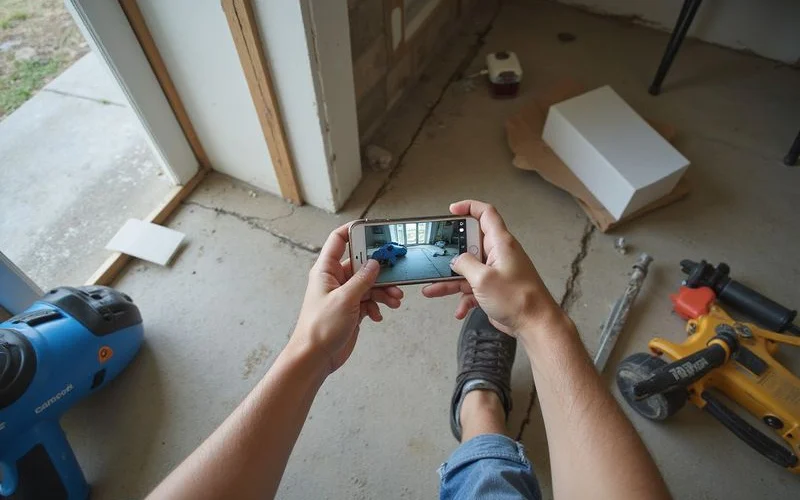
Photograph conditions with dates and something in frame for scale. Note when you first observed each symptom. Keep any professional findings, measurements, and reports. Retain receipts for related work. If a plumbing leak is involved, keep the plumber’s report including their assessment of when it likely began.
Where a claim turns on whether damage was sudden or gradual, contemporaneous records are far more persuasive than recollection.
A practical sequence
Understand the cause before you file. A claim for settlement will likely be denied; a claim tied to a covered plumbing event may not be. Knowing the mechanism first shapes what you are actually claiming.
Read your policy. Specifically the earth movement exclusion, any water damage provisions, any endorsements, and your deductible.
Talk to your agent. A hypothetical conversation about how a situation would be treated is not the same as filing, and agents will usually discuss it.
Get an assessment. An evaluation that identifies the mechanism gives you something concrete to bring to the conversation.
Consider the deductible. For smaller repairs, a claim may cost more in premium consequences than it returns.
Where we fit in
We evaluate and document conditions. A foundation evaluation records relative elevations, crack characteristics, moisture conditions, and drainage, and produces written findings that describe what was observed and what it may indicate.
We do not make coverage determinations, and we will not characterise a finding to suit a claim. Where a plumbing leak is a live possibility, we will say that a plumber with the right equipment should confirm it rather than asserting it ourselves.
For the symptom side of this topic, see foundation warning signs, which covers what to record and when.