
What counts as a foundation warning sign
A foundation warning sign is any change in your house that suggests the structure is moving relative to the ground beneath it. Most of them are indirect. You rarely see a footing fail; you see a door that stopped closing, a crack that opened over a winter, or a floor that developed a slope.
The useful skill is not identifying a single sign. It is recognising a pattern: several signs appearing in the same part of the house, over the same period, pointing in the same direction.
The signs homeowners notice most
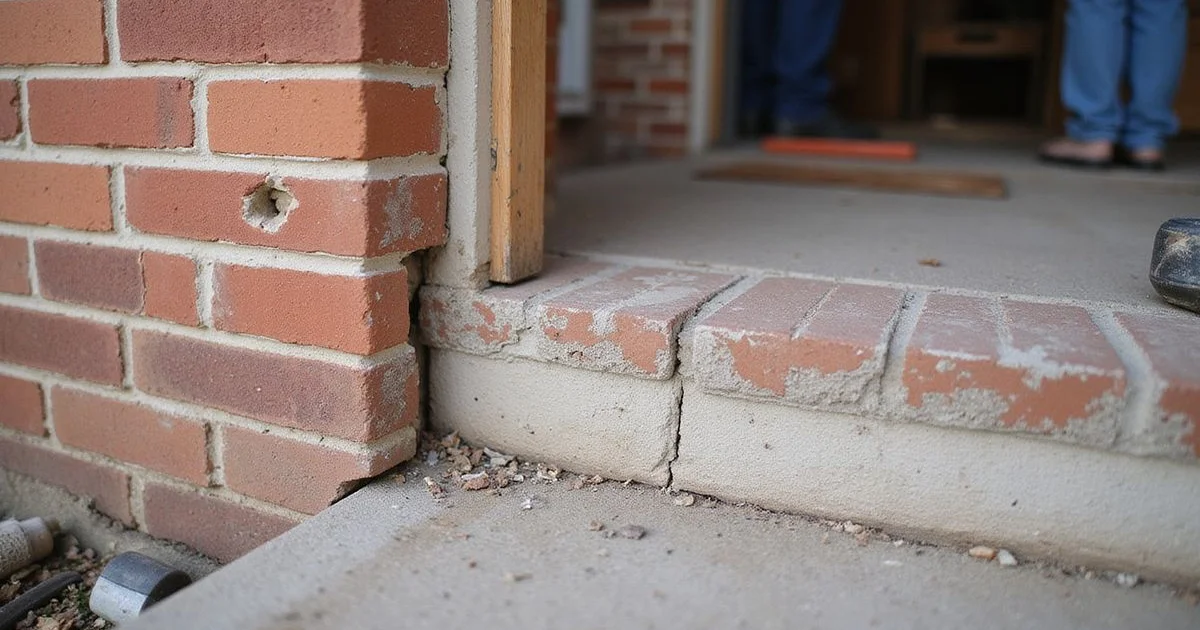
Cracks in masonry. Stair-step cracking that follows mortar joints diagonally through brick veneer is the classic exterior sign, especially near a garage opening or an outside corner. Separation above a window or garage lintel belongs in the same family.
Cracks inside. Diagonal drywall cracks radiating from door and window corners, cracks that reopen after being patched, and separation between walls and ceilings.
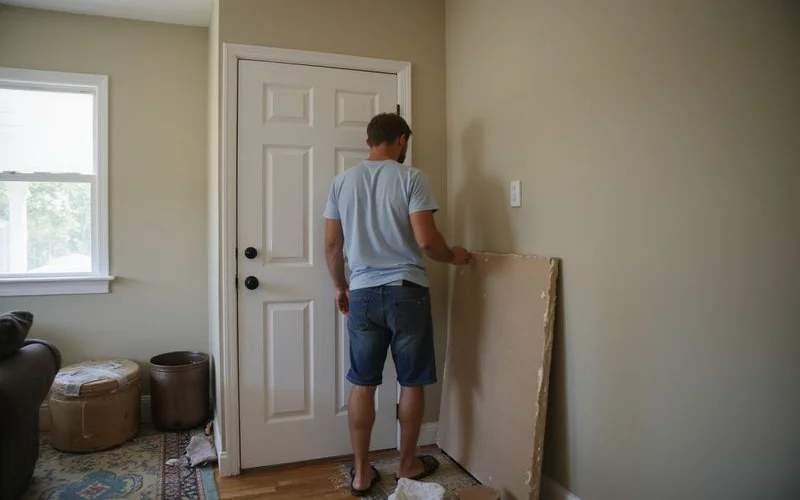
Doors and windows binding. A door that catches at the top corner, a window that will not run, or a door that closes in February and not in August.
Uneven or sloping floors. A noticeable fall across a room, a dip in a hallway, or floors that bounce as you walk them.
Gaps and separations. Trim pulling away from the floor, baseboards sitting proud of the slab, or a gap opening between a porch and the house.
Water where it did not used to be. Dampness at a basement wall-floor joint, a crawl space that smells musty, or efflorescence — that white mineral bloom — appearing on masonry.
What each sign may and may not indicate
This is where most online advice overreaches. A single symptom rarely confirms a cause.
Sticking doors, for example, are a genuine settlement signal — and also a completely ordinary consequence of humidity swelling a wooden door in a Middle Tennessee July. Our guide on sticking doors: humidity or settlement works through the distinction.
Wall cracks split the same way. Some admit water without any structural implication; others reflect real movement. Width, orientation, and progression matter far more than the fact that a crack exists. Basement wall cracks covers how to read them.
A damp basement establishes that water is present. It does not establish hydrostatic pressure or structural damage, however often it gets sold that way.
Floor slope is similarly ambiguous. Original construction tolerance, framing deflection, decades-old movement that stopped, and active settlement can all produce a slope. Crawl space moisture and sagging floors explains what is usually happening underneath.
Record before you act
The single most valuable thing a homeowner can do is build a record, because progression is what distinguishes a concern from a curiosity.
Photograph each crack with a coin, a ruler, or a tape measure in frame for scale. Write the date on the photograph or in a note. Mark the end of a crack with a pencil line and date it, so next season you can see whether it has travelled. Note the width at its widest point. Record the season, because seasonal patterns point toward expansive clay or humidity rather than progressive settlement.
Six months of that record is worth more to an evaluator than any description you can give over the phone.
When to seek an evaluation
Some situations justify moving sooner rather than monitoring.
Cracks that widened noticeably over a single season. A door or window that went from occasionally sticky to permanently binding. A basement wall showing visible inward bow or a horizontal crack along a mortar bed. A floor slope that appeared or worsened recently. Multiple signs clustering in one part of the house. Water entering where it never did before.
And one absolute: if ground is actively collapsing or a structure appears unsafe, move people away from the area and seek emergency assistance. A routine quote form is not an emergency response channel.
What happens at an evaluation
An estimator records relative floor elevations across the accessible area, notes crack locations and widths, checks moisture conditions, and walks the exterior perimeter to see where water goes. The findings state what was observed, what it may indicate, what could not be accessed, and what the recommended next step is.
Frequently that next step is not repair. Drainage correction and monitoring are common outcomes, and a good evaluation will say so plainly when the measurements support it.
If the pattern you are seeing has you concerned, a foundation evaluation is the step that replaces guesswork with measurements — and gives you something to compare against next year.