
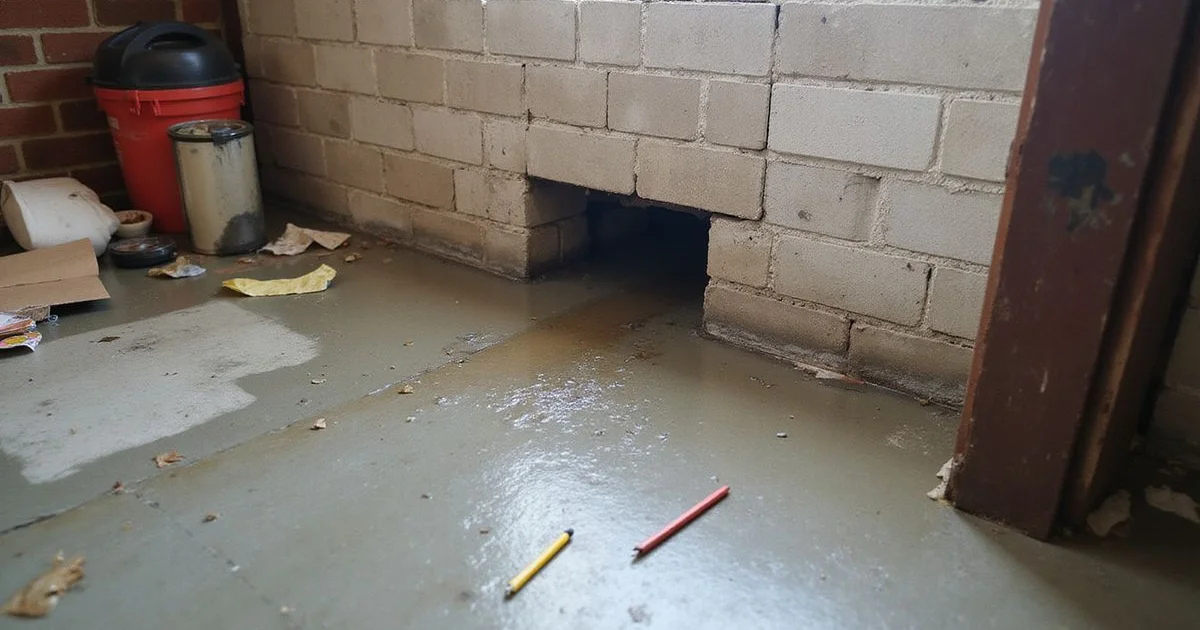
A diagnosis you can start yourself
Before anyone quotes you a system, it is worth spending two or three rain events working out what your basement is actually doing. The evidence is not hard to read, and it changes which scope you need.
There are four common sources, and each behaves differently.
Groundwater
The water table rises after sustained rain and reaches the footing, and water enters where it finds a path.
How it behaves: correlates with prolonged wet periods rather than individual storms. Often appears along the cove joint across a broad area. May take a day or two after the rain to show up.
What helps: interior perimeter drainage with a sump, or exterior drainage where the site allows.
Surface runoff
Roof and yard water arrives at the foundation and soaks into the backfill zone, which is the most permeable soil around the house.
How it behaves: tightly linked to individual rain events. Appears during or shortly after a storm. The outdoor evidence is usually visible: a downspout dumping at the wall, a grade falling toward the house, erosion at a particular spot.
What helps: gutters, downspout extensions or buried lines, and grading. Frequently the cheapest real fix available.
Plumbing
A supply or drain leak.
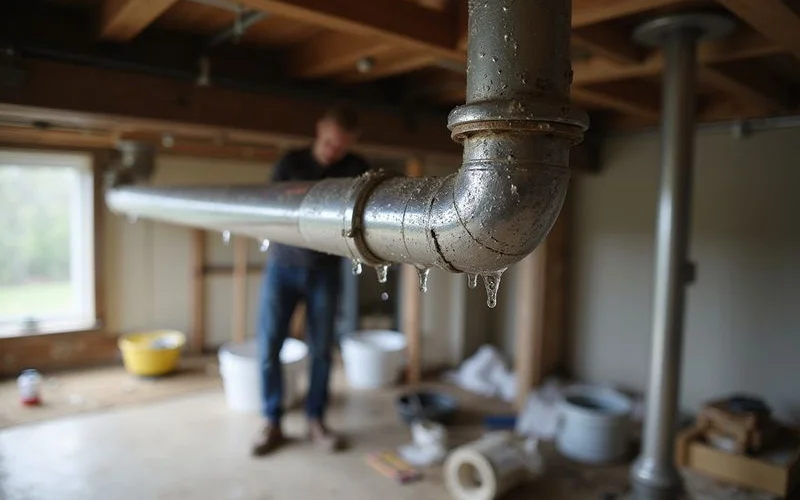
How it behaves: no relationship to weather whatsoever. Steady, localised, and often warm if it is a hot supply line.
What helps: a plumber. This one is quick to rule in or out and worth checking early.
Condensation
Warm humid air meets cool masonry and pipes, and moisture appears on surfaces.
How it behaves: worst in warm humid weather rather than after rain. Wets surfaces broadly. Shows on cold water pipes and ductwork as well as walls. Often accompanied by musty odour.
What helps: dehumidification, pipe insulation, and improved air management. Not a drainage system.
Cove-joint seepage: where water usually enters
The cove joint is the line where the basement wall meets the floor slab. It is a construction discontinuity rather than a fault, and it is the most common entry point once water reaches the footing perimeter under pressure.
Water appearing along that line after rain is one of the most frequent patterns in Middle Tennessee basements. It points to water reaching the footing rather than to a structural failure of the wall.
A simple diagnostic routine
Go outside during rain. Watch where roof water lands and where surface water runs. This single observation resolves more cases than any indoor inspection.
Note the timing. During the storm, a day later, or unconnected to weather?
Note the location. A specific joint or crack, or general surface wetting?
Check the pipes. Beaded with condensation, or dry?
Keep a short log. Date, weather, and what you saw. Three or four events produce a pattern.
What a damp basement does not establish
It does not establish that your foundation is damaged, that hydrostatic pressure is high, or that a drainage system is required. Those are separate findings with separate evidence, and each gets asserted routinely on the strength of a wet floor alone.
Our guide on hydrostatic pressure and basement walls covers what actually does establish those things.
The order we recommend
Correct the exterior water first — gutters, downspouts, grading. Then observe through a few more rain events.
If water still arrives, an assessment can specify a system appropriate to the source: interior perimeter drainage with a sump for water reaching the footing, or exterior work to intercept it earlier.
Our guide on how interior drainage and sump systems work explains the components, and the basement waterproofing service page covers how we assess and scope the work.