
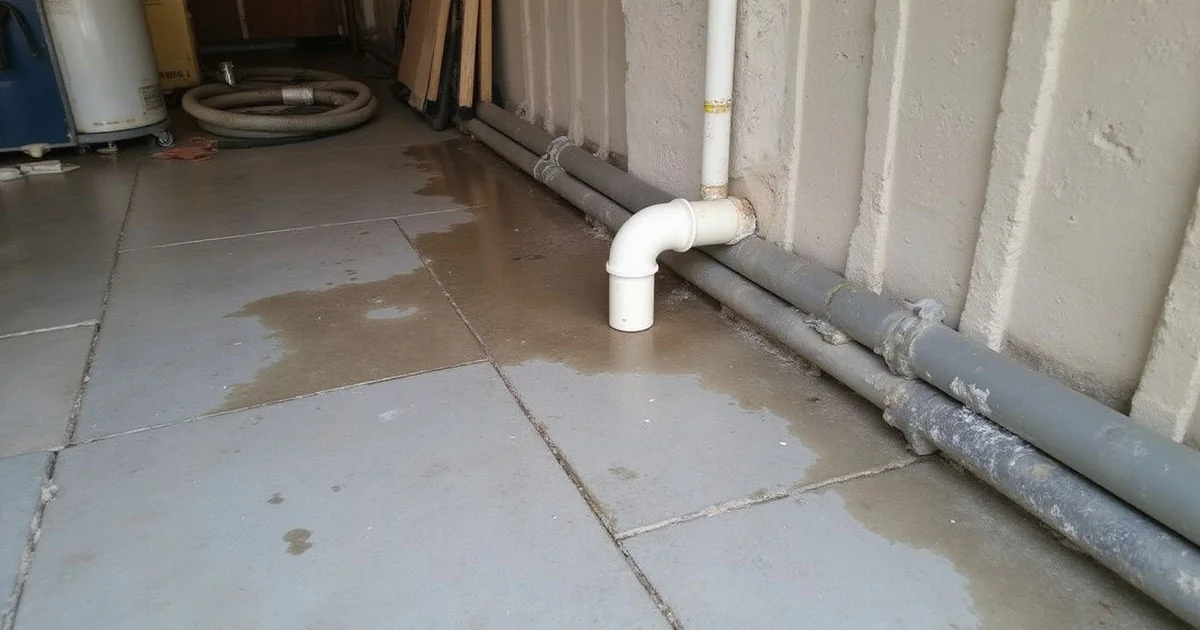
Start with the source, not the system
Water on a basement floor is a symptom with at least four distinct causes, and the systems that address them are not interchangeable. Installing interior drainage for what turns out to be condensation solves nothing and costs a great deal. Sealing a crack while a downspout keeps saturating the backfill outside solves it for one season.
So the first job is diagnosis. Here is how the four causes behave differently.
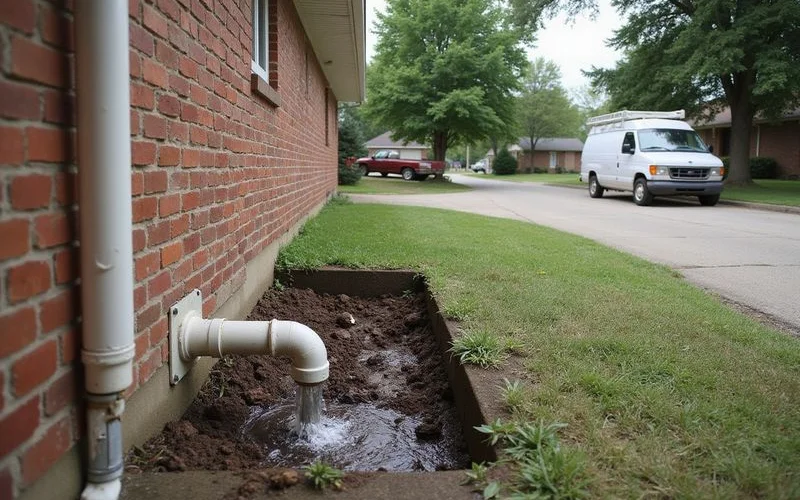
The four sources and their signatures
Surface runoff. Roof and yard water arrives at the foundation and soaks into the backfill zone, which is the most permeable soil around the house. Signature: water appears during or shortly after individual rain events, and the outdoor evidence is usually visible — a downspout dumping at the wall, a grade falling toward the house, mulch beds holding water against masonry, erosion tracks.
Groundwater. The water table rises seasonally or after sustained rain and reaches the footing. Signature: wetting correlates with prolonged wet periods rather than single storms, and it often appears along the wall-floor joint across a broad area.
Plumbing. A supply or drain leak wets an area with no relationship to the weather at all. Signature: it happens when it rains and when it does not.
Condensation. Warm humid air meets cool masonry and pipes, and moisture appears on surfaces. Signature: worst in warm humid weather rather than after rain, wets surfaces broadly, and often shows on cold water pipes and ductwork as well as walls.
Cove joint seepage and where water enters
The cove joint is the line where the basement wall meets the floor slab, and it is a natural discontinuity in the structure rather than a defect. When water reaches the footing perimeter under any pressure, it frequently finds its way in there.
Water appearing along that line after rain is one of the most common patterns in Middle Tennessee basements, and it points to water reaching the footing rather than a structural failure of the wall.
Other entry points: cracks in the wall, pipe and utility penetrations, window wells that fill and overflow, and the joint between an addition and the original structure.
What a damp basement does and does not establish
It establishes that water is present.
It does not establish that the wall is under hydrostatic pressure, that the foundation is damaged, that a sinkhole is forming, or that a drainage system is needed. Each of those is a separate finding requiring separate evidence, and each gets asserted routinely in sales conversations on the strength of a wet floor alone.
The reverse is also worth saying: a dry basement today does not prove there is no water problem. It may prove it has not rained enough recently.
Simple observations that narrow the cause
Go outside during or right after a storm and watch. Where does the roof water land? Does the ground fall toward the house anywhere? Is water pooling against a wall or in a window well?
Inside, note whether the wetting appears at a specific joint or crack, or as a general film across surfaces. Touch cold water pipes — if they are beaded with moisture too, humidity is part of your story.
Track timing. Keep a simple note of when water appears and what the weather was doing. Three or four events give you a pattern, and a pattern is diagnostic in a way that one wet morning is not.
Check the obvious mechanical things: gutters that overflow, a buried downspout line that gurgles or backs up, a sump pump that is not cycling.
The order of operations
Fix the cheap exterior things first. Clear the gutters, extend the downspouts, correct the grade. In a meaningful share of wet basements, that is most of the answer, and it costs a fraction of anything else.
Then, if water still arrives, assess for a system. Interior perimeter drainage with a sump is the common solution for water reaching the footing; exterior excavation and membrane work intercepts it earlier at greater cost and disruption.
Our guide on why is my basement wet goes further into the diagnostic process, and the basement waterproofing service page explains what each system involves.
When the water and the structure are related
Sometimes they are. Saturated clay against a wall increases lateral pressure, and sustained water movement under a slab can carry fines away and leave voids. Where an evaluation finds both water entry and structural movement, the honest scope addresses both — and it says which is driving which.