
The question behind the question
Most homeowners with a cracked basement wall are not asking whether it can be repaired. They are asking whether to spend the money now or wait.
That is a reasonable question, and the answer is genuinely “it depends” — but on specific, checkable things rather than on how worried you feel.
Signals that point toward acting now
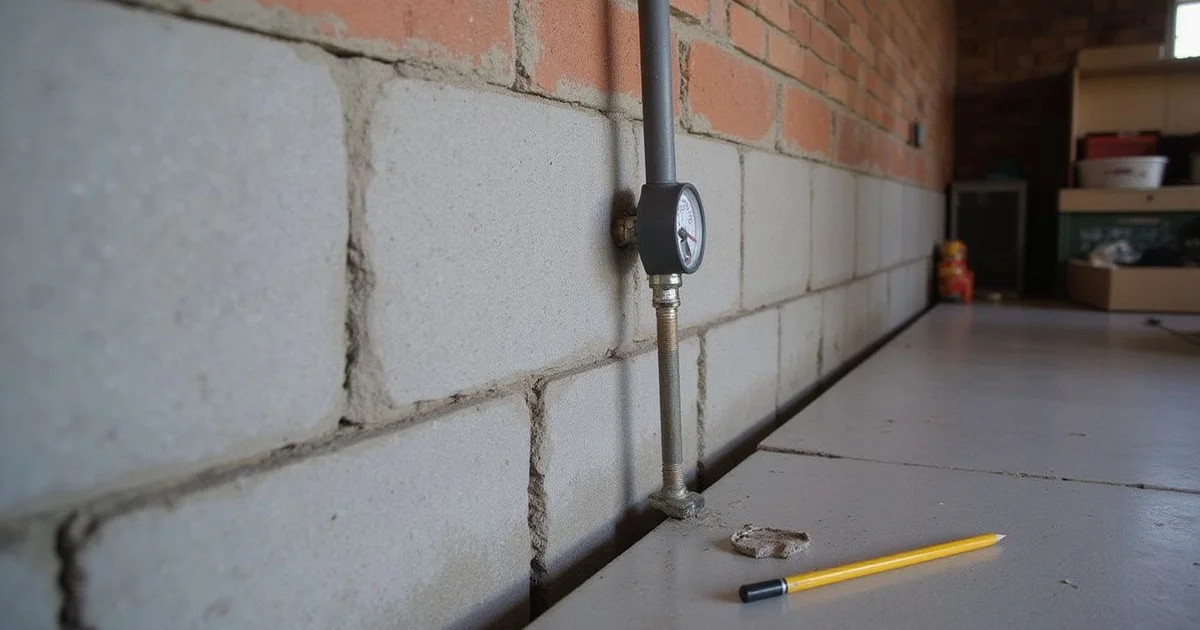
Measurable inward deflection. Hold a straightedge or plumb line against the wall. A visible gap at mid-height changes the conversation from crack to wall.
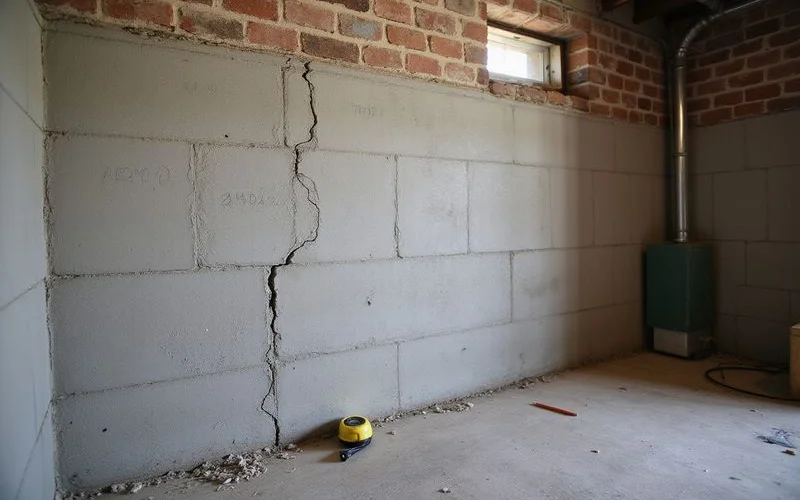
A horizontal crack along a mortar bed. This is the pattern most associated with lateral pressure, and it warrants measurement rather than monitoring on its own.
Progression. The crack is wider, longer, or has displaced since you last looked — assuming you have a record to compare against.
Displacement across the crack. One side sits proud of the other. That is movement, not shrinkage.
Mortar loss. Crumbling and falling mortar along the crack line suggests ongoing stress rather than a settled condition.
Companion symptoms. New drywall cracking, binding doors, or floor movement above the affected wall.
Water entry with structural signals. Water alone is a waterproofing question; water with deflection is both.
Signals that support monitoring
Thin vertical cracking in a poured wall with no displacement. A wall that measures plumb. No measurable change over a season or two. No companion symptoms upstairs. Dry, or minor dampness with no structural indicators.
Monitoring is a legitimate outcome, not a fobbing-off. But it only counts as monitoring if you are actually recording something.
How to monitor properly
Dated pencil marks. Draw a short line across each end of the crack and write the date. If the crack travels past the mark, you have your answer.
Photographs with scale. A coin, a ruler, or a tape measure in frame, with the date recorded.
Width measurements. Record the width at its widest point, in a note you will still be able to find.
Deflection readings. A straightedge against the wall at the crack’s height, recording the gap.
A crack monitor. An inexpensive plastic gauge mounted across the crack showing displacement on a grid. The most precise low-cost option.
Check seasonally rather than randomly, because seasonal movement is itself informative. A crack that opens through a wet spring and partially closes in August is describing clay behaviour.
Water-only versus structural
This distinction decides which service you need.
Water only. The wall is plumb, the crack is not displacing, and the complaint is moisture. That is a waterproofing and drainage scope: correct the exterior water, and seal the crack if needed.
Structural. Measurable deflection, progression, or displacement. That is a stabilization scope, and the drainage work belongs alongside it rather than instead of it.
Our guide on types of basement wall cracks covers how to read the crack pattern itself.
What to do this week regardless
Whether you act or monitor, correct the water. Clear the gutters, extend the downspouts, and check the grade falls away from the house on that elevation.
It costs very little, it reduces the load on the wall, and in some cases it changes the trajectory entirely. It is also the first thing any competent evaluation will recommend.
Getting a measured answer
If you are unsure, a measurement resolves it. A basement wall repair evaluation records the deflection, characterises the crack, establishes whether movement is active, and reviews the drainage — and if the honest finding is “monitor and fix the downspout”, that is what the findings will say.